Source : INDIA TODAY NEWS
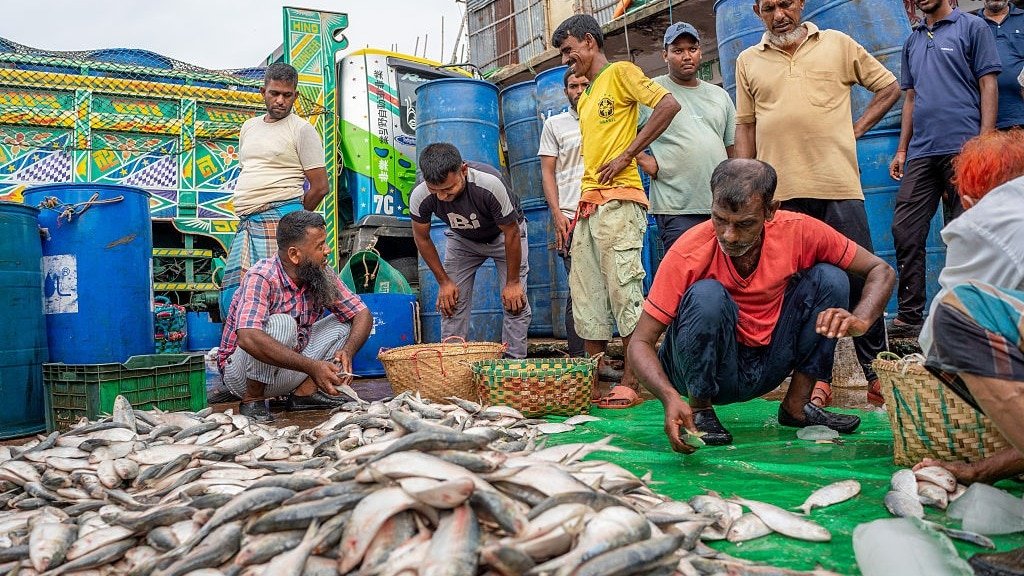
Bangladesh, which is the world’s largest producer and exporter of the hilsa fish, has abruptly halted its ongoing imports of the same fish from India after its Department of Fisheries cancelled numerous no-objection certificates (NOCs) previously issued to importers. According to reports, the decision to suspend might have been taken to prevent imported Indian hilsa from being sold as local or Padma hilsa.
advertisement
Meanwhile, Dhaka is yet to announce any shipments of hilsa to India, which typically take place every year prior to the Durga Puja.
Last week, Bangladesh made headlines after it imported the hilsa for the first time from India. The prized fish had been “mainly sourced” from Gujarat and was shipped through Bharuch port of the state, according to fish traders quoted by PTI.
Padma hilsa is considered to be fattier and tender than its other counterparts, while its oil is known for its unique fragrance and sweetness. Gujarati hilsa meanwhile, is leaner, and its higher roe content gives it a more bitter taste than its eastern cousins.
According to reports from the Bangladesh media outlets, the Department of Fisheries had on Wednesday (September 23), withdrawn at least 103 NOCs that enabled importers to bring in shipments of Gujarat hilsa via the Benapole land port (which is called Petrapole on the Indian side). The fisheries department conveyed the decision in a letter signed by its acting director general, Md Khaled Kanak.
This abrupt decision, which came despite Dhaka having previously permitted the import of 1,739.50 tonnes of hilsa from India in the current fiscal year, has left Bangladeshi importers in the lurch.
Hilsa importer Syed Mahidul Haque Rubai told the Dhaka-based newspaper The Business Standard that importers were facing significant losses due to the sudden suspension.
“The hilsa we purchased in India for import are kept there. Now we will have to return it at a lower price. On top of that, we are also facing losses from the import costs,” he told the newspaper.
Similarly, another importer, Ziaur Rahman, told Dhaka-based media outlet The Daily Star, “The unexpected ban has pushed us towards severe financial losses. Hilsa purchased and stored in warehouses across the border will now have to be sold back at lower prices. On top of that, non-recoverable import overheads will cause significant damage.”
Meanwhile, Indian researcher and columnist, Pratim Ranjan Bose, stated that Dhaka’s sudden about-face needs an appropriate response from New Delhi.
Writing on X, Bose noted, “Bangladesh has suddenly cancelled a Hilsa import order from India. It would be odd and shameful for India to not give it back by putting a sudden curb on imports of RMG [Ready Made Garments, which is Bangladesh’s largest export]. Just give it back to them. Make them pay double the price. They will know where the shoe pinches.”
WHY WAS HILSA EXPORTING BANGLADESH IMPORTING THE PRIZED FISH FROM INDIA?
The Fisheries Department of Bangladesh, which signed the order withdrawing NOCs issued to traders, has not given a specific reason as to why hilsa imports were abruptly suspended.
Asawadul Islam, an inspector at the Fish and Quality Control Office in Benapole, told The Business Standard that such a step was taken following instructions from the Department of Fisheries.
“The supply of Indian hilsa to the Benapole market has also stopped due to the suspension,” he said, adding that 535 metric tonnes of hilsa had been imported this year.
The Business Standard, citing unnamed “industry insiders”, reported that the suspension might have been taken to “prevent imported Indian hilsa from being sold as local or Padma hilsa, curb potential money laundering through under-invoicing and encourage greater interest in domestic hilsa production”.
That being said, Gujarat hilsa, whether being sold as the more premium Padma variant or not, has come to occupy a critical niche in Bangladesh. Although the country is the largest producer of the hilsa, including the highly prized Padma variant, its annual production has been on the decline for several years now.
According to a report in the newspaper of Bangladesh, Prothom Alo, annual production numbers have decreased from 571,324 tonnes in 2022, to 500,000 tonnes in 2025. As a result, hilsa prices in Bangladesh have soared from Tk 705 a kilo in 2018, to as high as Tk 2,600 a kilo on August 25.
This is where Indian hilsa, mostly caught from the Narmada river in Gujarat’s Bharuch, imported via Bangladesh markets in Howrah at prices as low as Tk 57 a kilo plays a critical role.
Dhaka-based activist academic Rezaur Rahman Lenin had earlier told India Today Digital that hilsa imports from India help bridge local and industrial supply shortages. According to him, the premium Padma and Meghna varieties sell for up to Tk 2800 a kilo, while the Gujarat hilsa goes for upto Tk 1,800 a kilo.
Additionally, the high roe content of Gujarat hilsa — which gives it a more bitter taste than its Bangladeshi cousins — means it was also being purchased by producers in Bangladesh to extract and sell the fish eggs, which are a delicacy in areas like Sylhet. Its low cost compared to local hilsa made it a cost-effective raw material for coastal processors producing salted and sun-dried hilsa.
WITH IMPORTS SUSPENDED, BANGLADESH EXPORTS TO INDIA ALSO REMAIN UNCERTAIN
With Dhaka having suspended imports of Gujarat hilsa, it is likely to also withhold approval for exports of Padma hilsa to India this year.
The Padmar Ilish (hilsa fish from the Padma) is a prized specimen in India, particularly in West Bengal, where its connoisseurs revere it for being fattier and more fragrant, and having an oil that carries a distinctive sweetness. That being said, for most Bengalis, Padma hilsa has been out of reach for years now.
In 2012, then Bangladesh PM Sheikh Hasina-led government banned all hilsa exports to India. Since then, Dhaka has only allowed limited shipments, dressed up as “gifts”, ahead of the Durga Puja.
No such “gift” has been announced so far by the Bangladesh PM Tarique Rahman-led government which took power in February this year.
The last such gift shipment was in 2025, when the then Muhammad Yunus-led interim regime allowed 1,200 tonnes of hilsa to be exported to India, down from 2,420 tonnes in 2024. However, only 145 tonnes actually reached India, including 106 tonnes through Petrapole.
With Bangladesh’s fisheries department yet to cite any specific reason for the suspension of hilsa purchases from India, it has left Bangladeshi importers who had already purchased consignments in Gujarat and were preparing to ship them in a difficult spot.
– Ends
SOURCE :- TIMES OF INDIA