

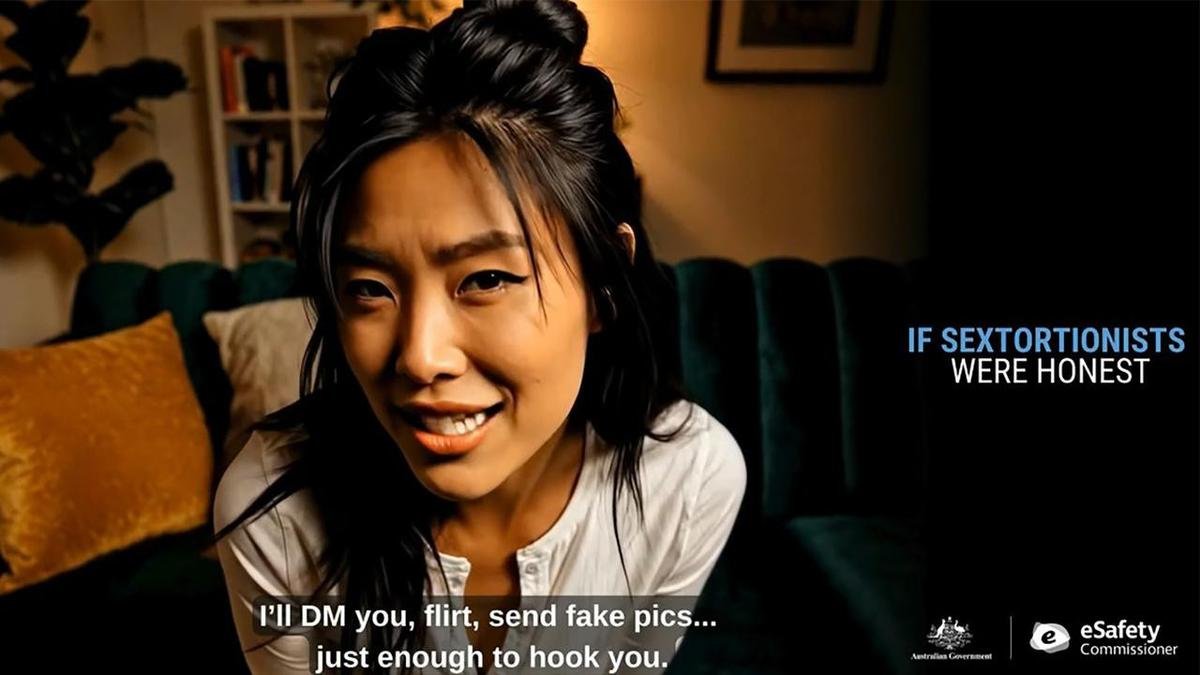
Source : Perth Now news
An attractive woman promising to share pictures of herself could be an AI-generated scam designed to lure and blackmail victims.
Those who reply with nude or compromising pictures of themselves are told if they don’t pay up, the images will be shared with their friends and family.
Thousands of Australians are continuing to fall for these sextortion scams as technology makes it harder to tell reality from a carefully constructed lie, government regulator eSafety revealed on Wednesday.
Victims are being told not to pay and instead to collect evidence through screenshots, block and report the account, and seek support.
Threats by offenders are designed to create panic and force quick decisions, eSafety commissioner Julie Inman Grant explained.
“I have everything to ruin your life,” one scammer threatened in a message shared with eSafety.
Other examples of real threats made by scammers include, “Even if you block me I will still spread this” and “If u not answer me u know what will happen to you (sic)”.
“One of the key tactics of sextortionists is to instil fear and shame,” Ms Inman Grant said.
“If you’ve been targeted, it’s not your fault and you’re a victim of a crime.”
Paying rarely makes the threats stop and scammers often come back and demand more after the first payment, Ms Inman Grant added.
eSafety received more than 3300 reports of sextortion in 2025, nearly half of which came from young men aged between 18 and 24.
Scammers often make first contact though dating apps like Tinder, Hinge and Grindr or through social media platforms; most commonly Instagram and TikTok.
They will quickly move conversations to a private, encrypted messaging service like WhatsApp or Telegram, under the mistaken belief evidence cannot be captured there.
Here, they might share nudes which they pretend are theirs and convince their victim to share compromising photos of themselves.
Once they have what they need, the scammers turn – using social media to identify friends and family of the victim and threatening to share the photos.
AI is making it far easier for overseas scammers to fool victims, with the technology covering up what used to be giveaways like typos and bad grammar.
If a victim is under 18, they can report being blackmailed to the Australian Centre to Counter Child Exploitation.
Those over the age of 18 should report scams to the platform or service where the blackmailer contacted them, and also to eSafety if intimate content is shared.


