Source : the age
One glance up from her desk reminds principal Julie McGonigle of the utter destruction caused by unchecked gendered stereotypes and violence.
On her wall hangs a circle of eucalyptus leaves painted blue, an artwork created on the day sports coach Lilie James was murdered by a colleague and former boyfriend inside the toilets of St Andrew’s Cathedral School in 2023. A twin work in pink hangs in James’ childhood bedroom. It symbolises the circle of support that comes after tragedy.
It’s a stark reminder that violence against women starts small: tracking location on Snapchat. A sexist joke on Instagram. They may seem like low-level infractions, but this school has seen first-hand where they can lead.
It is a crisis echoing across the city. Following a series of sexual assaults by students in Sydney schools, including Scots College, educators and parents are rethinking their approach to respectful relationships, while advocates have called for greater control over social media algorithms.
In the aftermath of the tragedy, McGonigle commissioned a review of international best practice on respectful relationships education and prevention of gender-based violence. The research stressed that schools must design their responses with students.
Students must feel safe to have open conversations about difficult topics such as coercive control, pornography and relationships.
“Their lived experience now makes them part of the solution because they have seen first-hand the pure devastation that is caused,” McGonigle said.
“This idea of compassionate accountability is about holding people to account, but still maintaining openness.”
Julie McGonigle, St Andrew’s Cathedral School principal
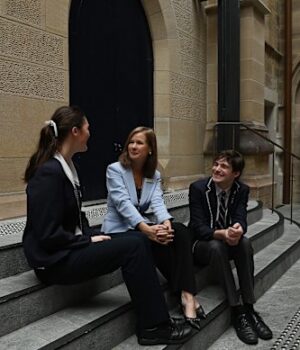
She formed a panel of experts including student representatives who meet quarterly to discuss coercive control, relationships, pornography and harmful online content. Year 12 students Ruby Buckman and Lachlan Sparshott both sit on that panel as representatives of the student body, helping to shape what respectful relationships education looks like in classrooms.
Ruby said the school’s inclusive approach meant education should be created “with young people, not just for them”, so students feel ownership and are more likely to engage.
Lachlan said the school has become more open. “It opened up a conversation where people feel very comfortable amidst friends, teachers and parents to talk about these topics.”
At St Andrew’s, students are explicitly taught to recognise patterns of coercive control and technology-facilitated abuse, such as tracking one another on Snapchat. Students are pushed to think critically about online content.
In a letter to students sent after the conclusion of the coronial inquest into James’ death, McGonigle issued explicit advice.
“Small things matter – sexist jokes and unwanted comments are not harmless ‘banter’. Call it out, interrupt it, seek support so that a harmful culture doesn’t develop,” McGonigle wrote in a letter to students. “There isn’t one ideal way to be a man or a woman – there are as many ways as there are personalities.”
The urgency of this work is backed by a University of Melbourne study, released last week, which found young Australians hold more violent and hostile attitudes towards women than any other generation, and that these views are metastasising in classrooms across the country.
Almost one in three boys aged between 13 and 17 believe attempts to give women equal opportunities have gone too far, the study found, while one in four believe feminism is damaging to society and should be resisted with violence if necessary.
The study found these attitudes were associated with the online content young people were consuming. “Engagement with ‘manosphere’ content, pornography and online dating showed the strongest links to misogynistic views,” lead author Dr Sara Meger said.
Youth educator Daniel Principe travels to schools to deliver workshops on healthy masculinity and consent. The other day a young boy asked him an earnest question: “How do you control a wife?”
Principe did not shame the boy. Instead, he used it as an opening to unpack where the student had learnt the premise. Principe encourages such questions. “We know that young people have already been exposed to pretty horrific ideas. We owe it to them to actually give them an opportunity to think through these things.”
At St Andrews, the school champions “compassionate accountability”.
“If boys feel like they’re the enemy – they’re the problem in society, all of them are violent offenders – you end up hardening a whole generation’s attitudes. The shutters come down, and you’re not getting anywhere. So this idea of compassionate accountability is about holding people to account, but still maintaining openness,” McGonigle said.
Principe warned this problem was not isolated to private schools, nor did he want schools to carry the weight of this scourge.
“These are cultural challenges. They are happening in all schools in all postcodes. I haven’t been to a school that hasn’t been impacted by these horrific attitudes,” Principe said.
“We’re actually doing more than we ever have. The difference is, we’re fighting against horrific industries who have made this challenge harder than ever before. We’re dealing with the fact that young people have been exposed to horrific content, influences, pornography online, well before quite often an adult at home or at school has had a healthy, constructive conversation with them.”
St Andrews does not have all the solutions. “There’s no silver bullets, and it’s not a quick fix,” McGonigle said. “You can’t just say ‘I’ve got three consent lectures, and I’ve nailed it’.”
Instead, she argues, it takes a connected and secure community, a culture that encourages students to stand up and intervene when they see low-level controlling behaviours.
Those who lived through 2023 were permanently changed, nor has the grief from the loss of Lilie diminished with time. “She was greatly loved and brought life, colour and vitality to our school,” McGonigle said.
Start the day with a summary of the day’s most important and interesting stories, analysis and insights. Sign up for our Morning Edition newsletter.
 Emily Kowal is a Walkley award-winning education reporter for The Sydney Morning Herald.Connect via email.