Source : the age
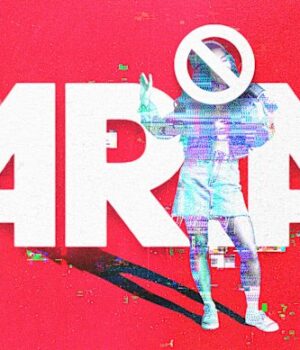
The organisation in charge of Australia’s pop music charts has announced a ban on tunes made wholly by AI, but some say it does not go far enough to protect local music.
The Australian Recording Industry Association will allow AI-assisted songs that have lead vocals, lyrics and primary instruments created and performed by humans to continue to top charts. Meanwhile, tunes “substantially” made using AI will not be allowed.
ARIA attracted criticism after an AI cover of Madonna’s hit 1989 song Like a Prayer by Josh Fawaz began topping its chart in May. The song’s credits on Spotify state that it uses generative AI for vocals and drums.
It peaked at No.2 at the time of release and has spent 16 weeks in the top 10. As of August 24, the song sits at No.4 on the chart. The track also appears on commercial radio as an Australian song, which helps stations fulfil obligations to promote 25 per cent Australian music – without paying the royalties.
ARIA chief executive Annabelle Herd said while her association “can’t control what people listen to”, the new policy was made to ensure that the tunes that appear on the charts are “substantially human-made”.
“We also don’t want to be celebrating or encouraging tracks that are recorded using AI tools that have stolen music to train their AI systems,” Herd said.
ARIA’s three new categories
- AI-generated: Not eligible
- Generative AI produced the recording, or the primary part of its creative elements. A lead vocal or a key instrumental performance generated by AI puts a recording here.
- AI-assisted: Eligible
- Humans wrote the song and performed the lead vocal and the primary instruments. Generative AI did something minor on top of that.
- AI in production: Eligible
- AI mastering, AI drum machines, stem separation, reverb or instrument patches that a person then plays are considered OK.
“It’s fine to use AI in your music creation … We’re not saying that that is going to be banned from the chart but we’re saying that tracks that are not substantially human [will be banned].”
The singer-songwriter Jack River, whose real name is Holly Rankin, said the changes were an important step for Australia’s music industry and had opened up a conversation about how “human” music can be in an era of AI.
“I really back it because it means that we’re putting human artistry and human creativity first,” Rankin said. “I don’t think anybody wants to go and see an AI agent performing at Groovin’ the Moo.
“We do need to have a conversation about what constitutes music, human-created music, and it’s a very strange reality we’re living in … I think we have that responsibility as artists to tell audiences what’s in our [music]. And our peak body needs to protect the real, human music economy behind this.”
Violinist James Steendam, the Media, Entertainment and Arts Alliance (MEAA) union’s federal president of musicians, said that while ARIA’s announcement was a step in the right direction for artists, theft of their work and creative output by AI companies continued “unabated, and this voluntary code of practice will not stop that”.
“The ARIA Charts Code of Practice is voluntary, so can only go so far … MEAA is calling on the federal government to step in and mandate labelling of AI-generated content across music and the creative sector,” said Steendam, who believes he was replaced by a synthesising technology in musical theatre production The Lion King.
When filling out the survey to submit a song to ARIA, artists will now have to tick a box stating whether they’ve used AI in the track, and whether it was AI-generated or AI-assisted.
“The range of AI-assisted actions permitted is too broad and includes synthesising backing vocals, strings, brass and other instruments. This undercuts session musicians or non-featured artists.”
In March, a North Carolina man pleaded guilty to defrauding music streaming platforms and musicians out of millions in royalties by flooding them with thousands of AI-generated songs and later using “bots” to boost licensing numbers.
In July, Spotify announced it was being inundated with AI-generated songs, and that it had removed more than 75 million spam tracks.
Toby Walsh, the chief scientist of UNSW Sydney’s AI Institute, said ARIA had stopped short of implementing licensing guidelines created by the global recording industry association, the International Federation of the Phonographic Industry (IFPI).
In July, ARIA welcomed a new labelling system created by the IFPI and other global music stakeholders. In its announcement on Tuesday the association stated that it had updated the ARIA Charts Code of Practice to include generative AI, following the global principles published this year by the IFPI.
“I’m glad they’ve got a policy. I’m somewhat surprised, a little disappointed that they haven’t gone with the [full] IFPI – the international guidelines that have been drawn up that they seem to have approved earlier,” Walsh said.
“The IFPI thought it was important that people were using AI-generated content, and so on, to manipulate the streaming algorithms, and why [ARIA] also thought that it wasn’t worth adding that, adding a provision to try and outlaw that or prevent that happening.”
Walsh says the licensing component was important to embed in ARIA’s code as it puts pressure on AI companies developing tools to license content.
“It will make content that’s not generated without that licensing less valuable because it won’t be going up the charts, the ARIA charts, and therefore won’t be getting the same attention as content that is generated with that,” he said.
“Even if it’s only psychological, even if it’s only a case of showing where their support is, even if it had no material impact upon the AI companies, I would still support the idea that they should be backing artists … [ARIA] had an opportunity to make a statement,” Walsh said.
Asked if ARIA would adopt the IFPI’s guidelines on AI tools and licensed content, Herd said: “We definitely support that in principle, and we have provisions in our code that include unlawful activity, unlawful tracks, unlawful tools. If we become aware of something like that then we can act on that as well”.
Steendam said artists and musicians currently have no share in the licensing arrangements between record labels and AI companies, “nor any right to refuse for their work to be used in this way”.
 Kayla Olaya is a culture reporter at The Sydney Morning Herald.Connect via email.