Source : INDIA TODAY NEWS
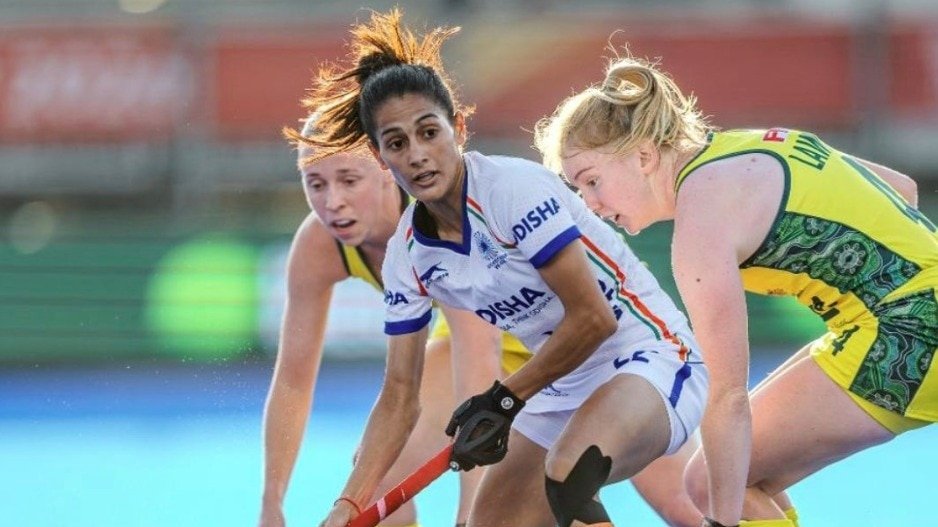
India’s women crashed out of the Hockey World Cup after a goalless draw against Australia in Amstelveen on Sunday, with the result sending the Australians through to the semi-finals on goals scored.
Tokyo 2020. Olympic quarter-final. Australia arrived unbeaten and as favourites. India produced one of the biggest wins in their history, stunning the Hockeyroos 1-0 to reach their first-ever Olympic semi-final.
advertisement
Five years later, it was the same opponent, the same high-stakes battle and another semi-final within reach. But there was no repeat of the Tokyo magic.
The final whistle brought a heartbreaking end to India’s campaign. Savita Punia was left in tears on the Indian bench, while Bichu Devi was also visibly emotional as the reality of elimination sank in. For a team that had fought so hard to stay alive, the margin was painfully small.
India entered the final match knowing that only a win would take them through, while Australia needed just a draw to progress. Earlier, the Netherlands’ 4-1 win over China had kept India’s hopes alive, with China eliminated from contention. However, neither India nor Australia could break the deadlock in a tense encounter.
The result left both teams level on two points with identical -2 goal differences. Australia, however, advanced by virtue of having scored three goals in the tournament compared to India’s two.
India’s wait for a World Cup semi-final therefore continues. The team had finished fourth at the inaugural Women’s World Cup in 1974, but have not been able to reach the last four since.
AUSTRALIA DOMINATE EARLY AS INDIA HOLD FIRM
The opening quarter was cagey, with Australia seeing more of the ball while India relied on their disciplined defensive structure. The biggest moment came early when Australia thought they had taken the lead after a close-range shot deflected off Jyoti and into the net. India immediately referred the decision, and the TV umpire ruled the goal out for dangerous play.
India were then reduced to 10 players after Baljeet received a green card, but Australia failed to make their numerical advantage count. Savita also produced an important save to deny Abigail Wilson. India threatened through Ishika and Navneet, but their build-up was undermined by misplaced passes and poor control.
Australia continued to enjoy the upper hand in the second quarter. Bichu Devi, who replaced Savita in goal as part of India’s rotation, made a crucial save from a reverse-hit, while Australia also earned a penalty corner. India survived after the injection went wrong.
The quarter also brought injury concerns for India. Ishika Chaudhary was forced off after a ball struck her on the head, while Lalremsiami later took a painful blow to her knee. India had a penalty corner late in the half but failed to capitalise, before Nikki missed a huge opportunity with just seconds remaining.
INDIA FIND THEIR RHYTHM BUT FAIL TO FINISH
India improved after the break, responding to coach Sjoerd Marijne’s demand for better possession. They began to string together attacks and showed greater intent in the final third. However, Australia remained dangerous on the counter.
The Australians appeared to have finally broken the deadlock when Stephanie Kershaw found the net from a penalty corner, but India referred the decision. The goal was overturned for dangerous play, giving India another reprieve. It was the second time Australia had seen a goal ruled out following a referral.
India had chances of their own, with Deepika unable to make clean contact after a promising move involving Navneet and Baljeet. With the score still 0-0 after three quarters, India had 15 minutes to save their World Cup campaign.
ALL-OUT ATTACK BUT NO TOKYO REPEAT
They threw everything forward in the final quarter. Navneet and Lalremsiami found themselves with a huge opening inside the circle, but hesitation over who would take the shot allowed Australia to recover.
With five minutes remaining, India removed Bichu Devi and introduced an additional outfield player, effectively going all-in for the goal they desperately needed. Australia, meanwhile, earned late penalty corners and threatened to punish India’s gamble.
India’s defence held firm, with Salima Tete producing a superb first-rushing effort to deny Australia. Even when India had to defend a penalty corner without a goalkeeper, they survived.
But survival was not enough.
The final whistle confirmed a heartbreaking 0-0 draw and India’s elimination. Australia’s superior goals-scored record sent them into the semi-finals by the narrowest of margins.
There was no Tokyo repeat, but India leave the tournament having shown that they can compete with the world’s best. Under Marijne, belief has returned to the side. The next step, however, is turning that belief and defensive resilience into the goals required to win the biggest matches.
– Ends
SOURCE :- TIMES OF INDIA