

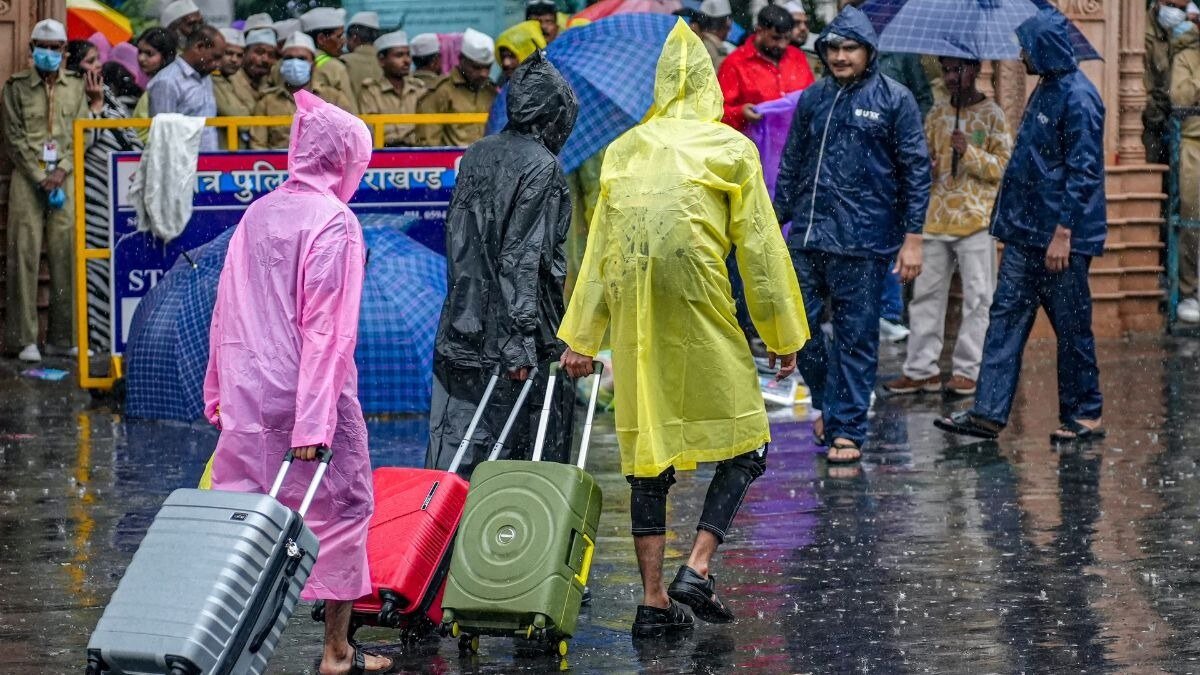
Source : INDIA TODAY NEWS
India is currently caught in a meteorological paradox that feels less like a seasonal shift and more like a violent swing of a pendulum.
As the Southwest Monsoon 2026 gathers pace across the southern peninsula and northeastern states, the rest of the country remains locked in a stifling, unrelenting heatwave.
While the monsoon finally set in over Kerala on June 4, marking a three-day delay from its historical schedule, its current progress is painting a picture of extreme instability.
advertisement
We are witnessing the arrival of climate whiplash, a phenomenon where the atmosphere oscillates rapidly between life-threatening heat and sudden, destructive deluges.
THE MONSOON ADVANCE AND CLIMATE WHIPLASH
The latest update from the India Meteorological Department (IMD) indicates that the monsoon has surged into parts of Maharashtra, Andhra Pradesh, Goa, Karnataka, Tamil Nadu, and the Northeast.
Meteorologists are now tracking a massive atmospheric trough off the coast of Kerala that is pumping life-giving moisture into the southern states. However, this transition is proving to be volatile.
Climate whiplash occurs when the atmosphere loses its ability to transition gradually, forcing urban and rural landscapes to cope with extremes that occur in rapid, erratic cycles.
Rather than a steady arrival, the weather is shifting in extreme bursts, leaving infrastructure and agricultural planning struggling to keep pace with the sudden onset of flood alerts.
THE NORTHERN HEAT TRAP
While the South and Northeast brace for heavy rainfall alerts, with some regions expecting up to 20 centimetres of rain, the North and Central regions are caught in a different climatic reality.
A persistent high-pressure system is effectively acting as an atmospheric wall, blocking moisture-laden winds from reaching states like Delhi, Haryana, Punjab, and Rajasthan.
This has kept these regions under a severe heatwave watch, with temperatures frequently breaching the 40 degrees Celsius mark.
The situation is worsened by the urban heat island effect, where concrete structures in our cities absorb solar radiation all day and trap it at night.
This prevents the essential drop in nighttime temperatures that people need for physiological recovery. Consequently, the heatwave is no longer just a daytime challenge; it has become a 24-hour health risk that shows little sign of breaking as long as the monsoon winds remain diverted.
THE EL NINO SHADOW
Beyond the immediate daily forecast, climate scientists are closely watching the Pacific Ocean.
The transition of equatorial Pacific waters toward El Nino conditions, a climate driver known to disrupt atmospheric circulation, remains a major concern.
The IMD has projected a below-normal monsoon season for 2026, estimating rainfall at approximately 90 per cent of the long-period average.
This creates a significant challenge for the kharif sowing season, as the uneven distribution of rain means some areas may face waterlogging while others remain critically parched.
As the country moves through June, the interplay between the advancing monsoon winds and these prevailing heat-trapping patterns will determine the success of the season for India’s agricultural heartland.
– Ends
SOURCE :- TIMES OF INDIA