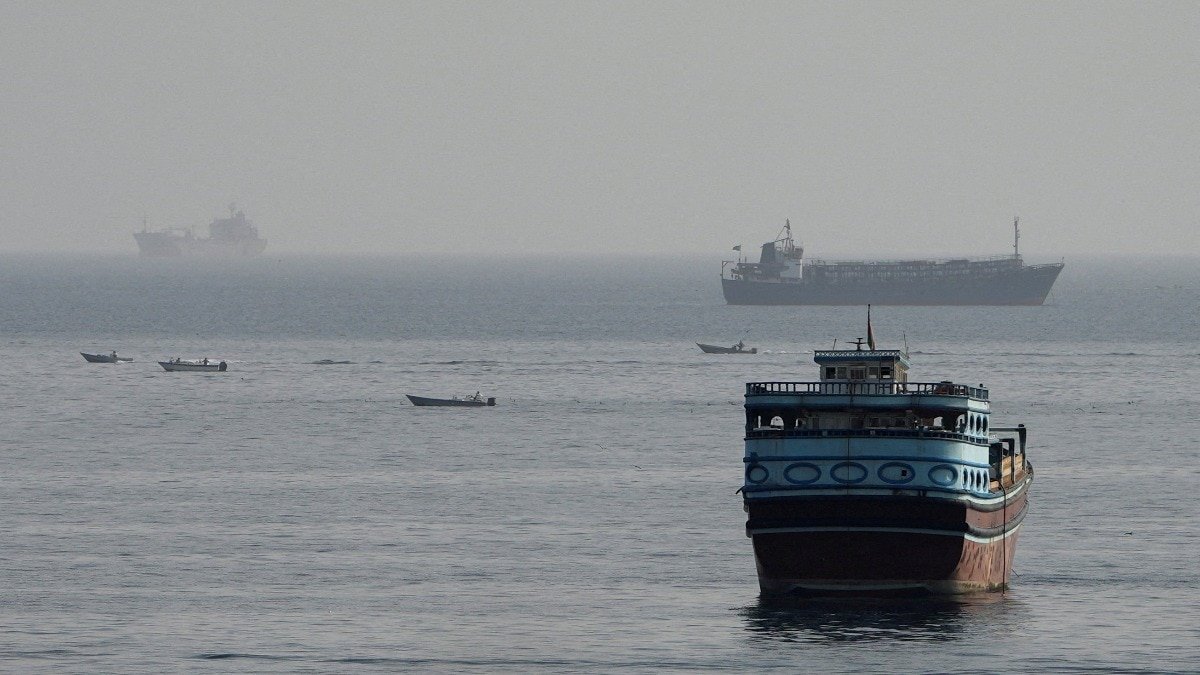
Source : INDIA TODAY NEWS
Iran and Oman are nearing an agreement on arrangements for shipping through the Strait of Hormuz, but Tehran has warned that a deal with Muscat alone will not be enough to fully reopen the strategic waterway to commercial traffic.
The development comes as diplomatic efforts intensify to restore shipping through the strait, a critical energy route that has been severely disrupted since the war between Iran and the US began following US and Israeli attacks on Iran on February 28.
advertisement
IRAN SAYS OMAN DEAL IS CLOSE
Iranian Foreign Minister Abbas Araqchi said on Saturday that Tehran and Muscat were “very close” to an agreement on a new shipping route through the Strait of Hormuz.
However, he stressed that reopening the waterway would depend on other conditions, including compensation from the US.
Araqchi said the previous traffic separation scheme used by ships in the strait was no longer acceptable to Tehran. Iran is now discussing a temporary shipping route with Oman while technical and legal issues surrounding a permanent arrangement are resolved.
Iranian President Masoud Pezeshkian said he believed the current moment was favourable for reaching an agreement.
“There is cohesion, strength, and unity in the country,” Iranian news agencies quoted Pezeshkian as saying, adding that Iran considered itself powerful after the conflict.
OMAN DESCRIBES TALKS AS POSITIVE
Oman said negotiations with Iran over arrangements for shipping through the strait were “positive and constructive”.
Muscat also condemned repeated attacks on vessels transiting the waterway, although it did not assign blame for the incidents.
“Oman stresses the importance of avoiding any actions that could affect these negotiations and the progress achieved,” its foreign ministry said.
The statement came as the latest attacks on shipping threatened to complicate diplomatic efforts to establish a new arrangement for commercial traffic.
UAE REPORTS FRESH ATTACK ON SHIP
The United Arab Emirates said Iran had attacked a carrier affiliated with the UAE’s state oil company with a missile while it was transiting the Strait of Hormuz.
No injuries were reported.
The UK Maritime Trade Operations agency said a vessel had caught fire after being struck by an unknown projectile. The fire was later extinguished, with no environmental impact reported.
Iranian authorities did not immediately comment on the incident.
US EXPECTS AGREEMENT TO RESTORE SHIPPING
A US official said on Friday that Washington expected Iran and Oman to reach an agreement soon that could allow normal oil traffic through the strait to resume.
The official said the US would lift its blockade of Iranian ports once commercial shipping was restored without impediments. US measures would be linked to Iran implementing its commitments under the agreement.
The development could mark an important step towards a broader settlement, but Tehran has indicated that restoring shipping will require Washington to meet additional demands.
TEHRAN LINKS REOPENING TO US CONCESSIONS
Mohammad Baqer Zolqadr, secretary of Iran’s top national security body, listed several conditions for a wider settlement.
They include an end to US threats against Iran, an end to military action against Iran and its regional allies, the lifting of sanctions and the blockade, and the release of Iranian assets.
Iran’s Revolutionary Guards also said reopening the Strait of Hormuz depended on Washington accepting Tehran’s conditions and was separate from the Iran-Oman negotiations.
“Whenever the United States accepts Iran’s conditions, the Strait of Hormuz will certainly be reopened,” Guards spokesperson Hossein Mohebbi was quoted as saying by Iran’s Tasnim news agency.
HORMUZ REMAINS CENTRAL TO WAR AND DIPLOMACY
The Strait of Hormuz has become one of the most important pressure points in the conflict. Before the war, roughly a fifth of global oil and gas shipments passed through the narrow waterway.
Iran’s restrictions on shipping have disrupted global energy flows, pushed up energy prices and contributed to inflationary pressures.
US Central Command said on Saturday that more than 30 ships had been allowed through for humanitarian aid since the blockade began. It said US forces had turned away 53 ships, disabled two vessels and boarded two others.
PROPOSED DEAL COULD GIVE IRAN GREATER CONTROL
Earlier this week, a senior Iranian source and two regional officials said a proposed Iran-Oman arrangement could give Tehran control over ships entering the Gulf through the Strait of Hormuz.
Such a provision would represent a significant concession to Iran. US officials have repeatedly said Washington would not accept Iranian control over access to the world’s most important energy shipping route.
The exact terms of the emerging arrangement remain unclear, and it is uncertain whether Washington has agreed to any changes to the proposed framework.
For now, the Iran-Oman negotiations offer a potential pathway towards restoring commercial shipping, but the wider dispute between Tehran and Washington means a deal over the waterway may still depend on a much broader political settlement.
– Ends
SOURCE :- TIMES OF INDIA