

Source : INDIA TODAY NEWS
Stretching before exercise has long been considered an essential part of any fitness routine. Many people believe it helps prevent injuries and prepares the body for physical activity. But recent research suggests that not all types of stretching offer the same benefits, and what you do before a workout depends largely on the kind of exercise you’re about to perform.
advertisement
WHY PEOPLE STRETCH BEFORE EXERCISING
The primary purpose of stretching before a workout is to prepare the muscles and joints for movement. It can improve flexibility, increase blood flow, and help you feel mentally ready to exercise. However, experts now recommend focusing on movements that actively warm up the body rather than holding long stretches before exercising.
STATIC VS DYNAMIC STRETCHING
There are two main types of stretching:
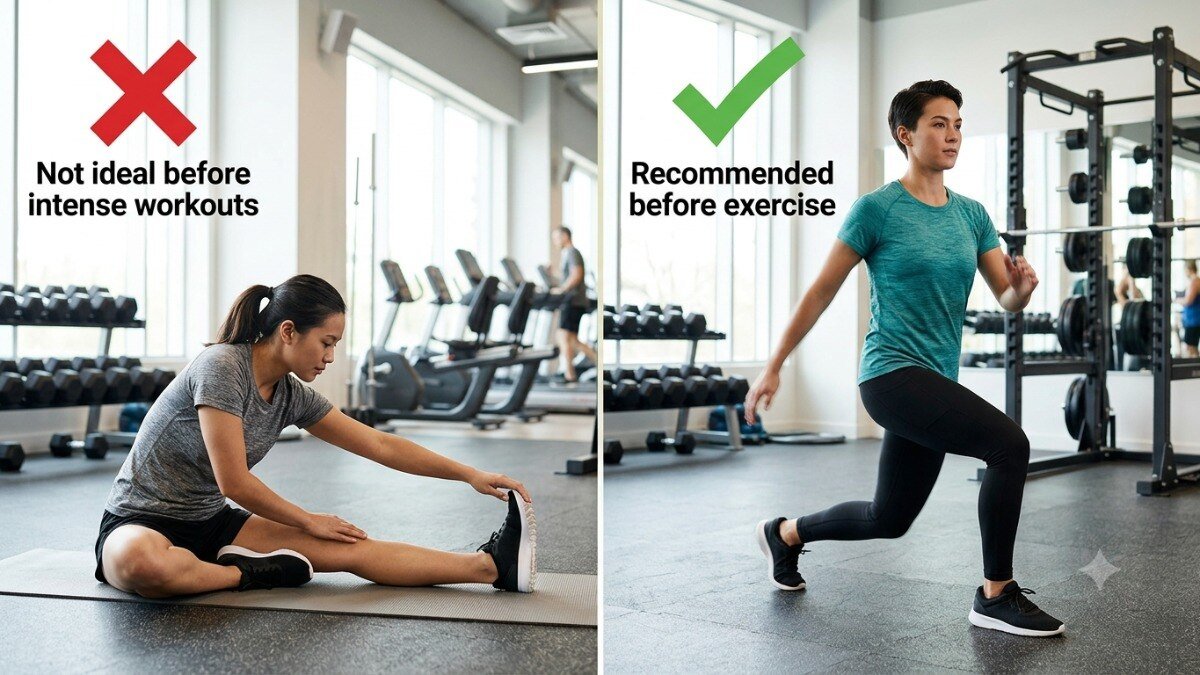
Static stretching involves holding a stretch for 15 to 60 seconds without moving, such as touching your toes or holding a hamstring stretch.
Dynamic stretching involves controlled, repetitive movements that take your joints and muscles through their full range of motion. Examples include arm circles, leg swings, walking lunges, bodyweight squats, and high knees.
For most workouts, dynamic stretching is considered the better option before exercising because it prepares the body for movement.
DOES STRETCHING PREVENT INJURIES?
Many people assume stretching before exercise prevents injuries, but studies suggest the relationship isn’t that straightforward. Static stretching alone has not consistently been shown to reduce the risk of common sports injuries.
Instead, a proper warm-up that gradually raises your heart rate and activates the muscles you’ll be using is more effective. Factors such as correct exercise technique, progressive training, adequate recovery, and suitable footwear also play a significant role in preventing injuries.
CAN STATIC STRETCHING REDUCE PERFORMANCE?
Holding long static stretches immediately before activities that require strength, speed, or explosive power may temporarily reduce muscle performance.
If you’re preparing for sprinting, jumping, or heavy weightlifting, prolonged static stretching could slightly reduce your ability to generate maximum force. This is one reason why many fitness experts recommend saving static stretches for after your workout.
WHY DYNAMIC STRETCHING IS A BETTER PRE-WORKOUT CHOICE
Dynamic stretching offers several benefits before exercise. It helps:
-
Increase blood circulation
-
Raise body temperature
-
Improve joint mobility
-
Activate key muscle groups
-
Enhance coordination and balance
-
Prepare the nervous system for movement
Because these movements closely mimic the exercises you’ll perform, they help your body transition smoothly into the workout.
WHAT SHOULD A GOOD WARM-UP INCLUDE?
A complete warm-up usually lasts between five and ten minutes and may include:
WHEN IS STATIC STRETCHING MOST BENEFICIAL?
Static stretching still plays an important role in a fitness routine. It is generally more effective after a workout, when muscles are warm. Post-exercise stretching can improve flexibility over time and help reduce the feeling of muscle tightness, although it may not completely prevent muscle soreness.
It is also useful during dedicated flexibility or mobility sessions.
WHO SHOULD TAKE EXTRA PRECAUTIONS?
People with existing injuries, chronic pain, joint conditions, or mobility issues should seek guidance from a healthcare professional or physiotherapist before starting a stretching programme.
If any stretch causes sharp pain, numbness, or dizziness, stop immediately and seek medical advice if needed.
Stretching before workouts is beneficial—but the type of stretching matters. For most people, a short dynamic warm-up is the best way to prepare the body for exercise, while static stretching is better reserved for after the workout or separate flexibility sessions. Choosing the right warm-up can improve performance, enhance mobility, and help you exercise more safely.
– Ends
SOURCE :- TIMES OF INDIA


