

SOURCE :- THE AGE NEWS
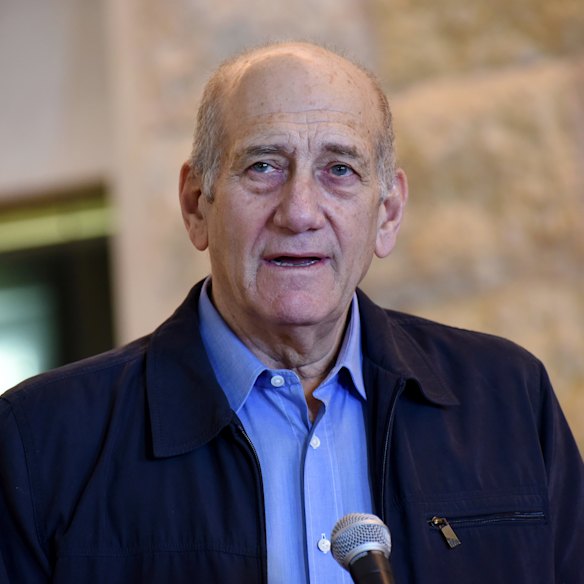
Former Israeli prime minister Ehud Olmert says he heard it many times over his long political career that his nation was entering its most important elections ever. That was often hyperbole. This time, he says, it’s true. Like many Israelis, he believes the nation’s fundamental identity as a Jewish and democratic state is up for grabs when they vote on October 27. “The crisis we are in today is the most threatening to the nature of what Israel was and what Israel is supposed to be that we have seen,” he says.
Mark Sofer, a former Israeli ambassador to Australia, agrees: “These aren’t regular elections. From an Israeli point of view they are almost existential.”
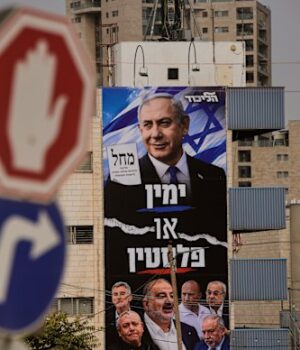
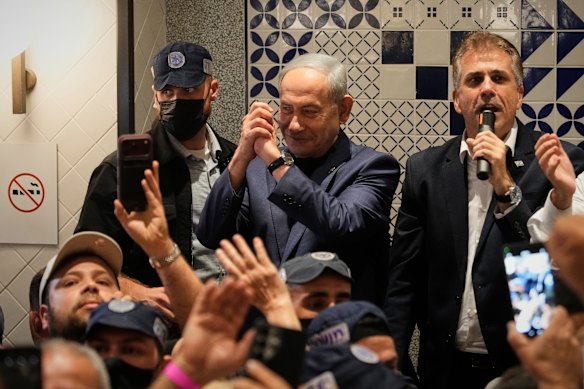
Monumental events have occurred since Israelis last voted in 2022. Prime Minister Benjamin Netanyahu launched a bid to weaken the country’s Supreme Court that drew hundreds of thousands of protesters to the streets. Then came the shock Hamas massacre of October 7, 2023, the deadliest day in Israel’s history and its worst security failure, when more than 1200 people were killed. That was followed by Israel’s wars against Hamas in Gaza (which has killed an estimated 75,000 people), Hezbollah in Lebanon, and the theocratic regime in Iran. Israel’s international standing has plummeted, including in traditionally friendly countries like Australia and the United States, the nation’s most important security partner. Netanyahu – who has led Israel for most of the past 20 years and has been indicted on corruption charges – is desperately trying to remain in power. His opponents are determined to consign him to history and start what they say will be a new era in Israeli politics.
One of the reasons Netanyahu has been able to remain in power for so long is his mastery of the quirks of Israel’s particular electoral system, which is significantly different to Australia’s.
The Sydney Morning Herald and The Age will be on-the-ground in Israel to cover this crucial moment in world history, one that will have reverberations around the world. Here’s our guide to how the election will work.
What happens on election day?
Voting in Israel is voluntary, not compulsory. Even so, turnout is usually high, reflecting the high levels of political engagement in society. In the last elections, 4.8 million of the country’s 6.8 million eligible voters showed up at the polls – a turnout rate of 71 per cent. Even more people are expected to vote this year, reflecting the heightened stakes.
Unlike in Australia, where postal voting has become increasingly popular in recent elections, Israelis must vote in person on election day. (Only those serving their nation overseas, like diplomats and defence personnel, can vote in advance by mail.) Israelis who live in settlements in the West Bank are allowed to vote in the elections but Palestinians in the West Bank are not.
One similarity to Australia: voters use old-school paper ballots, with no electronic voting allowed.
What is the Knesset?
Voters elect members of the Israeli parliament, known as the Knesset. It is what is known as a unicameral parliament, meaning it has only one chamber. The Knesset has 120 members, who are elected nationally based on a system of proportional representation. Crucially, voters vote for party lists rather than individual candidates. There are no local electorates. The parties that receive the most votes are rewarded with the most Knesset members, who are drawn from ordered lists of candidates submitted before election day.
For example, Netanyahu’s conservative Likud party won 23 per cent of the vote at the 2022 elections, more than any other party. On a proportional basis, this meant Likud was awarded 32 seats in the Knesset. The centrist Yesh Atid party won 18 per cent of the vote, receiving 24 seats.
The key number to aim for is the 61 seats required to form a government, though leaders prefer a more substantial buffer to create a more durable coalition. It is possible to govern in minority, but such a government would be even more fragile.
Crucially, parties must meet the threshold of 3.25 per cent to enter the Knesset. If they don’t meet this minimum, the party’s votes go to waste. This can have big implications for the election results. For example, two left-wing parties narrowly failed to cross the threshold in 2022, wasting nearly 290,000 anti-Netanyahu votes and helping him return to power. This means it can be more effective for several smaller parties to run together on a joint list to maximise their vote share.
Who is competing in these elections?
As is always the case in Israel, an eclectic array of parties is competing against each other. While some parties – like Netanyahu’s Likud – are mainstays of Israeli politics, it is common for parties to emerge, dissolve and merge with each other in this fluid ecosystem.
As a way to understand the election, it helps to think of three blocs.
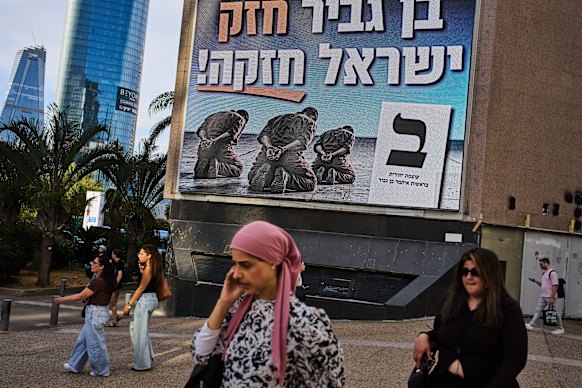
The first is known as the pro-Netanyahu bloc. This grouping, which has been in power for the past four years, has been the most right-wing and religious government in Israel’s history. Likud is the biggest party in the bloc. It also comprises two ultra-orthodox parties (United Torah Judaism and Shas) and two ultra-nationalist parties led by Itamar Ben-Gvir and Bezalel Smotrich, both of whom have been sanctioned by Australia for inciting violence against Palestinians.
The anti-Netanyahu or “change bloc” comprises parties campaigning for a decisive change of government. Over recent months Yashar (Straight), a centrist party founded by former military chief Gadi Eisenkot last year, has been leading in the polls. Other parties in this bloc include Together (a new party led by former prime ministers Naftali Bennett and Yair Lapid) and the left-wing Democrats party. The fourth party in the bloc is Yisrael Beiteinu (Our Home), a secular right-wing nationalist party. The key thing that binds these parties together, more than any particular policy, is their desire to drive Netanyahu out of office.
“Israeli politics tends to be very polarised, like American politics,” Mark Regev, Israel’s Australian-born former ambassador to the UK, explains. “Americans either loathe Trump or they think he’s the best thing since sliced bread. It’s the same in Israel. People either love Netanyahu or they detest him, and only a very small proportion of the public can go either way.”
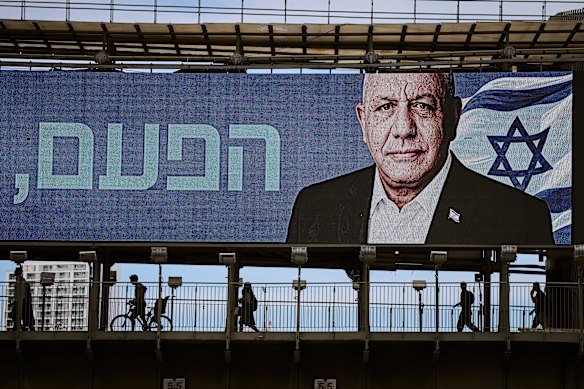
The third bloc is made up of parties currently unaligned to either of the two main groupings. These include those that win most of their votes from Arab-Israeli voters, many of whom prefer to be known as Palestinian citizens of Israel and account for about 20 per cent of the Israeli population, making them potentially powerful. Some other small parties hovering around the electoral threshold are also not clearly aligned with either the pro- or anti-Netanyahu blocs.
What about the Israeli president?
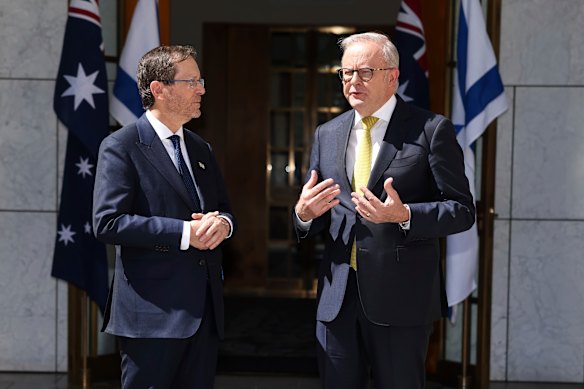
The president is the nation’s head of state but it is the cabinet, led by the prime minister, that runs the country. The presidency is a largely ceremonial position, similar to Australia’s governor-general. But it is not without power in some important respects (as we’ll explore later). Presidents are elected by the Knesset members and serve single seven-year terms. The current president, Isaac Herzog, a former leader of the left-wing Labor Party, has served in the role since 2021.
How are governments decided?
A single party has never won enough seats to govern Israel in its own right. This means governments always comprise a multi-party coalition, often made up of several parties with significant ideological differences and competing personalities.
After election day on October 27, Herzog will hold consultations with the leaders of all the parties elected to parliament. Based on these conversations, he will choose the leader he believes is most likely to form a viable coalition government. Depending on how close the result is, the president can have significant influence over who forms government.
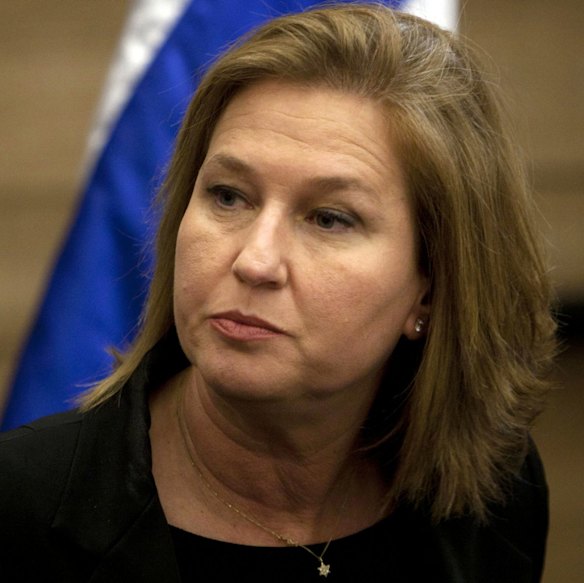
While the president typically gives the party with the most votes an opportunity to try to form a government, this is not always the case. For example, in 2009, former diplomat and minister Tzipi Livni’s centrist Kadima party won 28 seats compared with 27 for Netanyahu’s Likud. But then-president Shimon Peres gave Netanyahu the first chance to form a government, reflecting his view that a centre-right coalition was most likely to succeed. Netanyahu cobbled together a coalition and took Israel down a more decisively conservative path over the next two decades.
What happens if no one can form a government?
If there is a deadlock, another round of elections is a real possibility. After elections in April 2019, Netanyahu was given a chance to form a government but was unable to scrape together the required numbers. This led to another round of elections five months later. Again, no leader could form a governing coalition, meaning Israelis returned to vote in March 2020.
This is a scenario Herzog, the president, says he desperately wants to avoid happening again. If there is no decisive result he is believed to favour the creation of a broad national unity government, possibly one involving fierce rivals Netanyahu and Eisenkot.
“I really, truly will do all I can so there won’t be repeat elections,” Herzog told the Yedioth Ahronoth newspaper. “We need to wait for the results, rather than pass judgment, but we must do everything possible to avoid going back to this again and again and again.”
Read more:
Get a note directly from our foreign correspondents on what’s making headlines around the world. Sign up for the weekly What in the World newsletter here.


