Source : INDIA TODAY NEWS
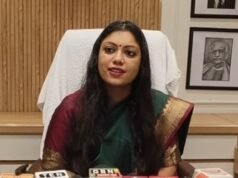
Manu Bhaker held back tears after missing out on a medal at the Asian Games, but the emotions became impossible to contain when she was asked about her former coach and mentor Jaspal Rana. The 24-year-old finished fifth in the women’s 10m air pistol final in Aichi-Nagoya on Wednesday.
It was Bhaker’s first multi-sport event since Rana died of cardiac issues in June, aged 49. The shooting legend had played a key role in her career, and his absence was deeply felt as she returned to the Asian Games. Asked about Rana after narrowly missing the podium, Bhaker struggled to speak as she recalled the lessons he had left her with.
advertisement
“If I remember all those years… it’s not that you remember once or twice, it stays with you. When a person has been a big part of your life, it stays,” Bhaker said.
Asian Games Live: September 23 Updates
Rana was a major influence on Bhaker’s career and guided her to two bronze medals at the Paris Olympics in 2024. He was also one of India’s most successful shooters at the Asian Games, winning eight medals, including four gold, across three editions.
For Bhaker, his biggest lesson was to focus on the process rather than the result. “He was just so adamant on process always — that you have to be able to, any given day, any given point in your life, whenever you shoot, you have to be able to give your best performance and follow your process,” she said.
Bhaker tried to follow that advice in Wednesday’s final, but an 8.9 on her eighth shot put her out of contention for a medal. “As much as anyone wants to deny it, yes, it definitely compromised the chances a lot,” she said.
Her preparations in Japan had also been far from smooth. Bhaker said Tuesday’s pre-training session had been particularly difficult.
“I had some issues like yesterday the PT (pre-training) was not good at all – lots of struggle, lots of things and I was not able to see the sighters properly,” she said.
She made sticking to her process the priority in qualification and the final.
“My process was the number one thing and I was able to do that in qualification and also in the finals. Most of the shots I was able to do exactly how I had planned, like how my process is. However, a few shots were not so good,” she said.
Rana’s absence made the competition particularly difficult for Bhaker. She recalled how she had looked forward to competing in Japan under his guidance.
“Of course, he was like the Asian champion, he was like the best of the best. When I came to the Asian Games (in 2018 Jakarta), I think he was like the undisputed champion and yes I was really looking forward to Japan actually and the circumstances were,” she said before pausing to compose herself.
Rana’s advice to Bhaker went beyond shooting. She remembered one message in particular.
“Life is very unpredictable and live it to the fullest, be kind and everything,” she said.
Bhaker said she had performed better in the Asian Games final than she had during simulated finals in Bhopal before the Games.
“If you compare the performance from there to here, the performance here is slightly better,” she said.
“I’m positive that in future I can do even better and can keep improving.”
She also credited her support team, including Serbian coach Jelena Arunovic, for helping her through a difficult period.
“You just see me, but so many people work so hard so that we are able to perform,” Bhaker said. “Coach Jelena… she has been so hardworking with everything and patient,” she added.
Bhaker left the Asian Games without an individual medal in the women’s 10m air pistol, but said she remained positive about her performance. “I’m very grateful and I really hope I can do better,” she said.
– Ends
SOURCE :- TIMES OF INDIA