Source : Perth Now news
Closure for the loved ones of many Australians and others still missing from the Nepal-Tibet floods is likely months away, while for some it may never come.
Forensic medicine expert Richard Bassed has worked to identify the dead following disasters in Australia and abroad.
The head of forensic medicine at Monash University flew to Thailand to help identify Australians lost to the 2004 Boxing Day tsunami and worked in the aftermath of Victoria’s Black Saturday bushfires in 2009.
But the scale of the task confronting forensics experts in flood-ravaged Nepal was in a class of its own, he said.
“I can’t imagine the difficulties,” Professor Bassed, who also serves as deputy director at the Victorian Institute of Forensic Medicine, told AAP.
“The bodies they recover will probably be miles from where they lived originally, they’ll be decomposed, they’ll be traumatised from what happened to them.
“There will be people buried under hundreds of feet of mud and they may never be found.”
Prof Bassed is not involved in the Nepal-Tibet disaster response but has been watching it from afar.
Of the work he has been involved in, he said only the 2004 tsunami – when as many as 5400 people died in Thailand alone – could compare.
“They were everywhere,” Prof Bassed said of the dead washed up and down the country’s Indian Ocean coastline.
“They were buried in sand dunes, they were inside wrecked hotels.”
Despite a year-long effort, aided by victim identification breakthroughs made during the 2002 Bali bombings, as many as 900 remained unidentified, he said.
DNA testing has significantly improved in the years since, adding to developments in imaging and facial recognition technologies, the professor said.
But he stressed Nepal’s mountainous landscape and the challenges of co-ordinating international support teams, along with local resource constraints, meant the work of identifying the dead would likely end before all those missing are found.
“It’s a real political decision as to how long they keep going,” he said.
“I imagine that they’ll keep going for a while yet, but they’re not going to be going in a year’s time.”
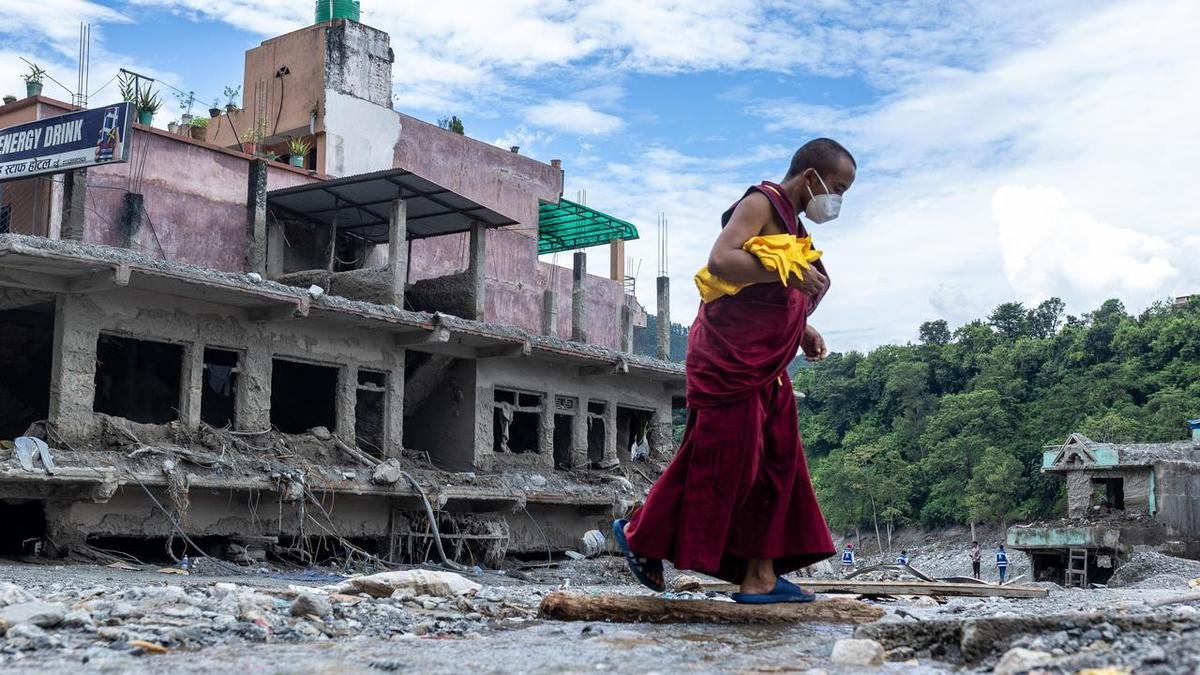
The disaster began on August 26, when a glacial collapse brought catastrophic floods to far-flung towns along the Nepal-Tibet border.
More than 1400 people have died while 6150 remain missing, according to the latest figures from Nepalese authorities.
Among the missing are 35 Australians, added to separate losses on the Tibetan side of the border.
On Wednesday, Nepal’s Disaster Risk Reduction and Management Authority said DNA samples had been taken from 1286 bodies.
In a statement to Reuters, it confirmed 105 bodies had been successfully identified, less than 7.5 per cent of those recovered.
As forensics experts, including those tasked by the Australian Federal Police, work to identify the dead, rescue crews are working to reach survivors.
UNICEF estimates more than 3600 people have lost their homes, while more than 84,000 have been in some way affected, including 32,000 children.
Aid groups are delivering vaccines to towns at risk of water-borne diseases and working to restore water services and install sanitation supplies.
But many areas remain hard to reach due to damaged roads and collapsed bridges, forcing workers to make use of helicopters and makeshift ropeways.
Those with missing loved ones are clinging to hope but Prof Bassed said the chances of finding more survivors were increasingly dim.
“I hope to God that they find them, but I wouldn’t be for certain saying yes, ‘we will find them’ or that ‘we will bring them all home’,” he said.
“I think now it’s just purely recovery and identification.”
The Department of Foreign Affairs and Trade was contacted for comment.