Source : INDIA TODAY NEWS
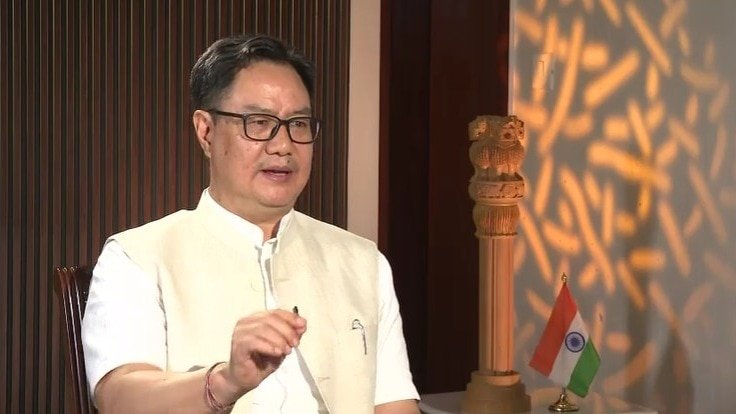
Parliamentary Affairs Minister Kiren Rijiju has claimed that several Opposition MPs privately urged him to speak to Congress leader Rahul Gandhi, Samajwadi Party chief Akhilesh Yadav and other senior leaders so that contentious bills – FCRA, Delimitation and Women’s Reservation – could be discussed in Parliament. He said many MPs wanted debate but were unable to participate because their leadership was unwilling to allow discussions in the House.
advertisement
Speaking in an interview with India Today’s Marya Shakeel, days after the Monsoon Session ended amid repeated disruptions, Rijiju said he held extensive discussions with Rahul Gandhi and Akhilesh Yadav and had productive conversations with several Opposition leaders.
“Many opposition MPs came to me personally and said, please talk to Rahul Gandhi ji, Akhilesh ji and some other people and discuss the bill. We want to speak. They simply do not listen,” he said.
Rijiju said the government had informed the Business Advisory Committee before introducing bills, allotted time for debate and consulted Opposition parties.
“There is not a single incident where we passed any bill without consulting the opposition,” he said, rejecting allegations that the government pushed legislation through by force.
His remarks came after Parliament’s Monsoon Session ended with 12 bills passed by both Houses but with very limited debate, especially in the Lok Sabha.
Rijiju acknowledged that the session fell short from a parliamentary perspective.
“As a parliamentarian I would definitely want to scrutinise the bills and all the members should get enough time to speak,” he said, adding that the Opposition was the “real loser” because it could not place its views on record.
The minister said the government’s legislative business had been completed satisfactorily, but meaningful discussion did not take place because major Opposition parties, particularly the Congress and the Trinamool Congress, stayed away from debates in the Lok Sabha.
He added that some Opposition parties did participate in Rajya Sabha discussions.
Rijiju also addressed the deadlock over the Women’s Reservation Bill and the Delimitation Bill, both constitutional amendment measures requiring a special majority with a 2/3 vote.
He said the government never claimed it would pass them during the Monsoon Session.
“We have the numbers, but we did not press for it because we thought there should be more consultation within the parties,” he said, adding that constitutional amendments could not be passed amid uproar and disorder in the House.
On the Foreign Contribution (Regulation) Amendment Bill, 2026, Rijiju said the government agreed to refer the legislation to a Joint Parliamentary Committee despite having the numbers to pass it.
He said committee scrutiny would allow detailed examination of concerns raised by the Opposition and insisted the bill did not target minorities.
During the parliamentary debate, he challenged Opposition leaders to identify any clause that discriminated against minorities.
The minister also defended the government’s handling of the broader confrontation during the session.
He said the government had offered a discussion on the NEET paper leak and the student agitation linked to it, but the Opposition was unwilling to participate in a broader debate and insisted on specific answers regarding the July 20 protest incident.
Parliament ended the session after passing 12 bills, including measures related to public examinations, births and deaths registration, the number of Supreme Court judges, taxation, banking records, tribunals, mining and minerals, cooperative development and the change in Kerala’s name.
However, 11 of the 12 bills were passed in the Lok Sabha without substantive discussion, and productivity remained extremely low, with the Lok Sabha functioning for about 19 per cent of the scheduled time, according to government figures.
Rijiju said the government remained ready for discussions and expressed hope that the Winter Session would see a return to fuller parliamentary debate.
The Opposition, meanwhile, has continued to argue that the session represented a serious erosion of parliamentary scrutiny and accountability.
– Ends
SOURCE :- TIMES OF INDIA