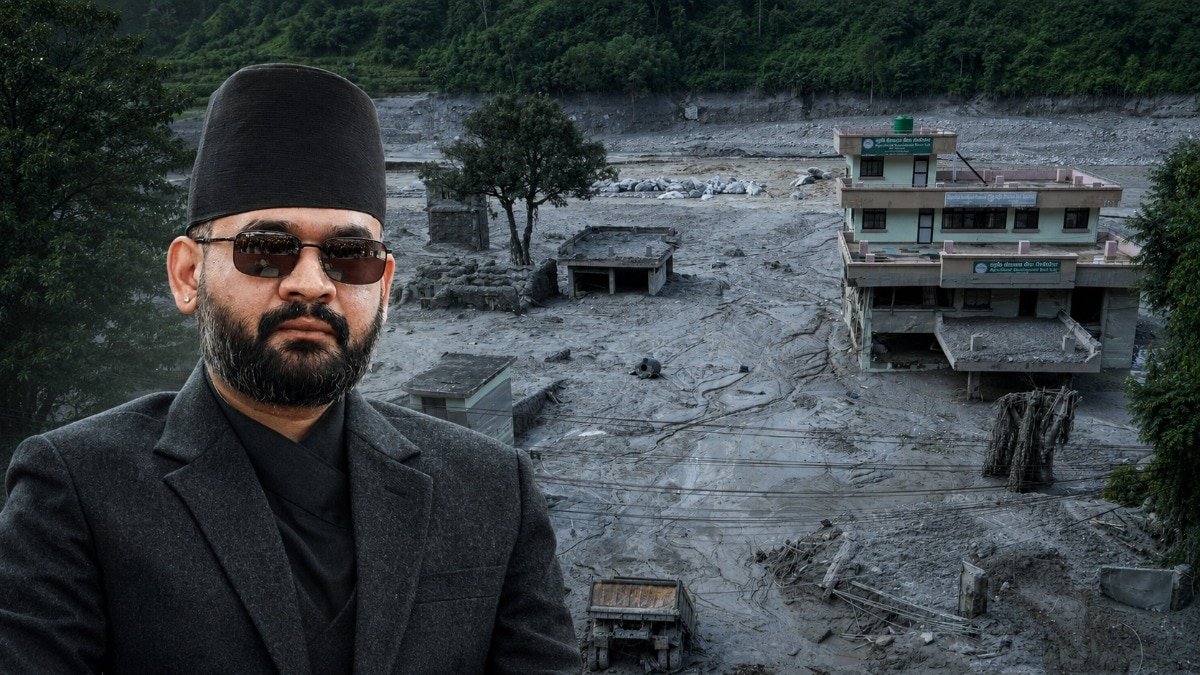
Source : INDIA TODAY NEWS
Nepal has declined offers from India, China and several other countries to deploy helicopters and trained teams for the search and rescue of people missing after the catastrophic Bhote Koshi floods. The PM Balen Shah-led government said its security agencies were capable of conducting the rescue operations and had created a central mechanism to coordinate information concerning hundreds of missing foreign nationals.
advertisement
While Nepal is accepting foreign assistance in the form of relief supplies and financial contributions channelled through the government, it has declined offers of foreign search-and-rescue assistance. There is a lesson from the past behind Kathmandu’s decision.
India, China, the United States, the United Kingdom, Japan, South Korea, Sri Lanka and Bangladesh were among the countries that officially or informally offered search-and-rescue teams. International organisations also approached Kathmandu, while some governments offered helicopters and personnel trained to operate in disaster zones, according to Kathmandu-based news outlets, The Kathmandu Post and Hamro Patro.
The flash flood has killed nearly 400 people, while more than 1,300 still unaccounted for, according to the latest figures. Hundreds of foreign nationals, including Indians travelling to Kailash Mansarovar and Gosainkunda, are among those unaccounted for. At least 84 Indians have been rescued and hundreds are missing.
Following its Neighbourhood First Policy, India initially sent 10 tonnes of humanitarian assistance and followed it with another 37.5 tonnes aboard a military transport aircraft. The supplies carried by C-130J and C-17 aircraft included temporary shelters, blankets, hygiene kits, solar lamps, medicines and food packets. New Delhi has also offered Bailey and prefabricated truss bridges to Nepal, where dozens of small and big bridges have been destroyed. India was among the first responders when a devastating earthquake hit Nepal in 2015.
So, why has Kathmandu declined any assistance in search and rescue operations from countries including India, China and the United States?
NEPAL SAYS ITS OWN FORCES CAN HANDLE RESCUE. WHY?
A senior Nepalese foreign ministry official told The Kathmandu Post that the government had received multiple official and unofficial requests from countries and organisations seeking permission to send their teams. “However, the government has told them that Nepal’s own security agencies are capable of handling the operation,” the report said.
Nepal’s experience after the April 2015 earthquake was central to the decision, according to the senior foreign ministry official quoted by The Kathmandu Post.
The earthquake brought a massive international response, with rescue contingents, military aircraft and relief organisations arriving from across the world. While this expanded Nepal’s emergency capacity, the sudden influx also created serious logistical and administrative pressure.
Nepali officials told the Post that competition among foreign contingents and difficulties coordinating their movements complicated management at a time when airports, roads and communication networks were already under strain.
Kathmandu now wants to avoid a repeat by retaining a clear Nepali chain of command rather than accommodating several independently operating foreign rescue teams.
Nepal has declined offers of foreign search-and-rescue assistance, but is accepting assistance in the form of supplies and financial contributions. India’s Ministry of External Affairs spokesperson Randhir Jaiswal underlined that distinction while talking about New Delhi’s response. “Whatever request has been made by Nepal, we are acting on that,” he said.
A ONE-DOOR SYSTEM FOR FOREIGN HELP; SPECIAL TEAM FOR MISSING FOREIGNERS
Nepal has asked its overseas missions to seek financial support only through the Prime Minister’s Relief Fund. This “one-door mechanism” is intended to centralise contributions, avoid duplication and allow the government to decide where resources are most urgently needed.
Kathmandu expects to seek further financial and material support during rehabilitation and reconstruction. The United States, the United Kingdom and the World Bank have already announced assistance, while the Asian Development Bank has offered support extending beyond the emergency to risk assessment, early-warning systems and resilient infrastructure, according to news agency Reuters.
The Nepalese foreign ministry has also established an Emergency Response Team (ERT) to coordinate cases involving overseas nationals. Nepal’s Department of Tourism said in figures released on Thursday that 668 tourists from 34 countries had been out of contact since Wednesday. At least 290 Indians are missing or uncontactable in Nepal, according to New Delhi,
“The ERT shall serve as the central coordinating body within the ministry to facilitate search, rescue, information verification, and consular assistance in respect of foreign nationals affected by, missing in, or otherwise connected to the flood incident,” the Nepalese foreign ministry said.
An under-secretary has also been sent to the operations team in Timure, Rasuwa, to collect information directly from security personnel and relay it to Kathmandu.
Even as India extends the assistance Nepal needs amid the present flood crisis, New Delhi has long been among the first to help its neighbours in times of disaster.
India played a frontline search-and-rescue role after Nepal’s devastating 7.8-magnitude earthquake in April 2015. Under Operation Maitri, Indian Air Force aircraft and helicopters delivered relief supplies, evacuated stranded people and flew missions to areas cut off by the earthquake. India also deployed National Disaster Response Force teams, medical personnel, engineers and sniffer dogs, becoming one of the first countries to reach Nepal.
– Ends
SOURCE :- TIMES OF INDIA