

source : the age
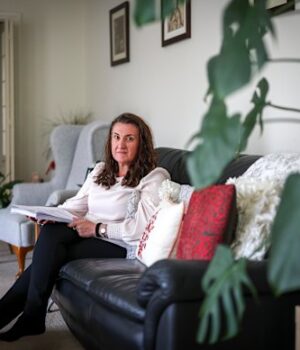
Marija Kustura has lived in the home she built in a quiet pocket of Doncaster East for 26 years. She was making plans for her elderly parents to live there as well.
Until she learnt of a council’s quiet plan to buy and demolish her house to replace it with a park.
Manningham Council in 2020 identified Kustura’s home for acquisition, but only revealed its plans to her in a letter sent in May this year. Last week, a council rates notice revealed the value of her home had fallen by $50,000.
“It’s a home that I built and I want to stay here. I don’t want to move,” Kustura said.
“How am I supposed to find another property when the new properties are double-storey and they don’t have the same quality as I have at the moment?”
Kustura’s home is one of seven properties in Doncaster, Doncaster East and Bulleen that the council is considering compulsorily acquiring to create or extend existing parks.
The size of the proposed reserves are three or four residential blocks.
If the plan gets the green light and is eventually approved by the state’s planning minister, the homes could be acquired within the next 20 years.
Kustura, who is in her 50s, wants to stay in her home for the rest of her life as several family members live nearby. The healthcare worker had planned to renovate her single-storey home for her ageing parents to live with her, but that plan has been put on hold.
She said she felt increasingly vulnerable and had trouble sleeping since she learnt about the proposal, and had no intention of putting her home up for sale.
She has been unable to find any similar properties without owners corporation fees, which she currently does not pay and has not budgeted for.
Kustura said she was blindsided by the rates notice, which showed the market value of her home – determined by the council – had decreased, while the value of a family member’s home in the next street had increased, despite no changes to either property in the past 12 months.
After she was told of the potential acquisition, Kustura asked a real estate agent to value her property, and the agent found it could be worth about $150,000 more than the figure in the rates notice.
There are vacant lots, car parks and commercial properties nearby, while multiple properties in the street have sold in the past few years. The council bought a property that shares a fence with Kustura’s home.
“I understand there has to be pocket parks within certain residential areas, but there are existing pocket parks within our area,” she said.
Doncaster home owner Kirpal, who asked not to use his surname, said finding out about the acquisition plan was a “bolt from the blue”.
“I almost fell backwards. No forewarning, no consultation, no communication,” the father of three said.
Kirpal’s son lives at the property, but the family wanted to build four townhouses in the future so they could live together.
“I really am disgusted,” Kirpal said.
“In a housing crisis, pulling down well-appointed and very liveable properties for open space makes little logical sense.”
Manningham councillors were last week due to decide whether to continue with the acquisitions but delayed the vote until later this year. If endorsed, the process takes about 18 months to finalise. Residents will have opportunities to try to prevent the acquisition.
The council’s 2014 open spaces strategy was developed so all residents can have access to suitable open spaces within 400 metres of their home.
Council documents say the proposed acquisitions will enhance the accessibility, usability and distribution of public open space. Eighteen per cent of land in Manningham is open space, while multiple properties earmarked for potential acquisition are in areas with increasing density or the highest density in the council area.
The council’s chief executive was tasked with negotiating the acquisitions of 13 properties under a “confidential report” in May 2023, and five properties have since been acquired on the open market.
Kustura and other affected residents were notified of the plan in a six-paragraph letter sent by registered post in May and invited to meet with council workers.
In a statement, a council spokesperson said no final decision had been made and the councillors’ vote was delayed to gather more information and consider feedback.
The purpose of the plan, the spokesperson said, was to reflect on how the council could address gaps in open space provision and respond to the needs of a growing community.
“We understand the concerns that have been expressed by residents whose properties may be impacted by the proposal,” the spokesperson said.
“We recognise that any proposal such as this requires careful consideration, and that is why additional time is being taken to further examine the information before determining the next steps.”
Independent assessors are tasked with valuing properties which are compulsorily acquired, a different process to how rates are determined.
Alan March, a professor of urban planning at the University of Melbourne, said it was relatively uncommon – but not unheard of – for homes to be acquired to create small suburban parks.
He acknowledged lives were disrupted by such proposals, but planners had to also consider the overarching public benefit to the community by creating more open space, particularly as more high-density developments are built.
“This project has some challenges in it, it really does look like it’s going to impact people, but on balance, we need to make these hard choices to bring about good quality of life for people in our cities into the future,” March said.
“More authorities in Melbourne and Victoria should be taking these sorts of forward actions because there are swaths of land in some municipalities that have no parks at all.”
Get the day’s breaking news, entertainment ideas and a long read to enjoy. Sign up to receive our Evening Edition newsletter.
 Rachael Ward is a journalist in the City team at The Age. Contact her at rachael.ward@theage.com.auConnect via email.

