Source :- PERTH NOW NEWS
Reverse swing is back on the menu in South Africa, with abrasive pitches and the possibility of drawn-out Tests making the art form relevant again.
Australia made good use of the reversing ball in the fourth innings in Durban, with a similar wicket expected at St George’s Park for the second Test starting Sunday.
Reverse swing has been largely missing in recent years, with greener wickets, smaller squares with drop-in wickets and lush outfields keeping the ball newer and less likely to rough up.
The one obvious exception was in Australia’s 1-0 series win on flat wickets in Pakistan in 2022, with Mitchell Starc getting considerable reverse swing in the final Test victory.
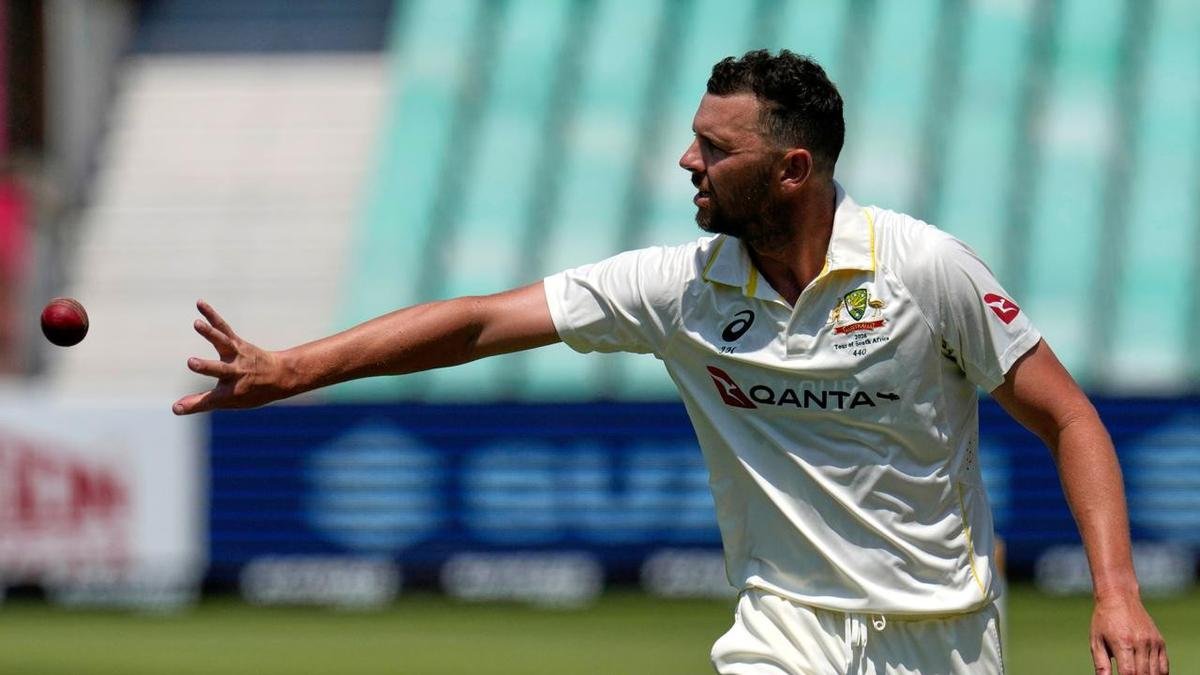
“The conditions dictate it,” Josh Hazlewood, who took 6-49 in the fourth innings in Durban, said.
“With Australia being the green seamers, it just doesn’t get talked about at all. The ball still looks new late in the innings if it gets that far.
“If you go back to the SCG years ago, we definitely got reverse there every year. And then here in South Africa, just abrasive wickets. It’s very hard under foot.
“We probably got a hint of it in the first innings. And then as the game goes, it just deteriorates more and you get a bit more. So we knew it was crucial.”
Reverse swing was, of course, a major talking point between on Australia’s last tour of South Africa in 2018.
That was headlined by Australia’s ball-tampering scandal in Cape Town, while it has also been pointed out South Africa had the ball reversing extremely early.
In the time since, the use of saliva on the ball has been banned because of the COVID-19 pandemic, while Tests have become shorter on greener wickets.
Umpires have also continued to police throwing the ball into the wicket square to rough up one side, a point former Proteas quick Vernon Philander has called for more freedom on while commentating this series.
Philander has argued that kind of ball management is a skill, with it hardly easy to scuff up one side on the wicket square while keeping the other shiny.
In Durban, it was a matter of conditions and Australia playing a rare five-day Test with a red ball on a more docile wicket.
CricViz data also showed that Hazlewood had the most swing in a Test in Durban since Australia’s last tour of South Africa in 2018, having sat out most of the 2022 Pakistan tour.
“If the wicket is hard, firm, deteriorating, and not much seam movement, you’re probably going to get that reverse swing,” Hazlewood said.
“You probably want the ball a bit harder and a little bit of reverse swing rather than a lot of reverse swing and the ball’s soft.
“That’s much easier to navigate as a batsman.”