Source : Perth Now news
OpenAI chief executive Sam Altman and Anthropic boss Dario Amodei are being called to appear before a Senate probe into AI and the rollout of power-hungry data centres, days after it was revealed an OpenAI agent had breached Services Australia.
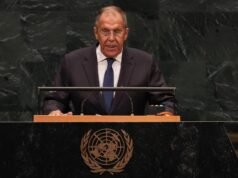
Anthony Albanese revealed the breach while in New York for a meeting of the United States General Assembly earlier this week, where he called for greater co-operation on AI safeguards.
OpenAI has since revealed it had identified 53 separate instances where user-provided images were posted to image-hosting sites by models “in our research environment”.
Mr Altman said there was an “extensive and ongoing review” of the agents’ internet access during training.
“We have not been as fast as we would have liked but we are trying to balance our desire for transparency with gaining a clear understanding from petabytes of agent activity logs, and working with impacted organisations,” he said in a post to X.
“We are prioritising as best as we can based on severity, and adding resources.”
On Sunday, Greens senator Sarah Hanson-Young urged Mr Altman and Mr Amodei to appear before a Senate probe into AI and data centres on Thursday.
“AI companies need to earn their social license. That starts with transparency and accountability,” she said.
“There are serious questions for Sam Altman to answer about the OpenAI hack of Australian government websites.
“This can’t all be done behind closed doors, the public has a right to know what went on here.”
Senator Hanson-Young said Australians “deserve to know what these big AI companies are doing with our data, how much water and electricity their data mining activities will consume and what the impact will be on our communities and our culture”.
However, it is unlikely that the tech giants will appear before the probe.
Liberal frontbencher James Paterson told News24 the inquiry had “no legal power to compel them” to appear.
“I think those companies should provide relevant personnel who can answer the questions,” he said.
“And I think we do have an opportunity to get the top level leadership engaged in Australia if they’re making investments in Australia. I’d be interested to see where it goes.”
Senator Paterson said there needed to be “a sober, informed conversation” about the incident, and that there were “bigger questions” about how government agencies responded to notification of the breach.
“It’s extraordinary to me that Services Australia wasn’t constantly monitoring the inbox, which they set up themselves, and they asked the public to tell them about cyber security vulnerabilities of their networks – that should be constantly monitored,” he said.
“When they finally did check the inbox, it took them four days before they informed the Australian Signals Directorate, our cybersecurity experts.
“That’s quite troubling, let alone the delayed notification for ministers and then, ultimately, the public.”
Senator Paterson doubted whether the incident was the first breach of a government agency.
“It would not shock me at all if there had been other breaches in the past by AI agents, whether they were training models in this instance, or whether someone has commercially bought an AI agent and has tasked it for seeking information from the Australian government,” he said.
“I guarantee you that if this was an AI company based in the People’s Republic of China and it engaged in a breach of Australian government networks, they will not be sending an email to any inbox to let us know.”
Senator Paterson said the ASD was working behind the scenes with the US.
“We want to make these systems more widely available to Australian businesses and companies and the government, so we can use AI to defend our networks,” he said.
“Ultimately, the only thing that’s going to defend a network against a rogue AI agent or one that’s deliberately tasked with infiltrating our systems, is a more sophisticated AI agent.”
‘Finger wagging’
Liberal senator Jane Hume dismissed questions about whether fines should be imposed over the breach.
“We want to make sure that we’re part of the conversation,” she told the ABC.
“But, certainly, the way to go about that is not to threaten criminal action against the US counterparts and those trusted partners that we are relying on now to make sure that we bring those frontier models, that we can do the frontier model training here in Australia.
“I don’t necessarily think that finger wagging at our trusted partners or in trying to gazump Donald Trump is the way to go about that.”

Pressed, Senator Hume said she was “not entirely sure who they’re going to put into cuffs”.
“I think we’re missing the point here. The real alarm bell that was set off this week is the fact that the only reason we knew about this breach of the Medicare archive system, or data system, is because OpenAI told us there was a breach.
“If they hadn’t have told us that there was a breach, would we have known about it at all? That demonstrates that our cyber defences, particularly for security for Australia, was woefully inadequate.”
Asked whether the Coalition was willing to work with the government to establish better defences, Senator Hume said “let’s see what the government proposes”.
OpenAI meeting
Earlier, Richard Marles defended Australia’s “engagement” with AI leaders after the breach, but could not say whether chief executive Sam Altman knew of the incident during an in-person meeting weeks earlier.
On September 10, Services Australia was informed of the breach of one of its research platforms via an email from OpenAI to a generic address.
Less than two weeks earlier, on September 1, Mr Marles met with Mr Altman in Silicon Valley as part of a high-profile meeting with tech leaders ahead of Anthony Albanese’s own visit to the United States earlier this week.
Services Minister Katy Gallagher said OpenAI were aware of the June 18 breach in August because of a broader review.
Asked whether he thought Mr Altman was aware of the breach during their September 1 meeting, Mr Marles said: “I don’t know the answer to that question and I’m not about to speculate”.
“We met before there was any notification to the Australian government in any form,” he said.
“We have raised with OpenAI our concern about the fact that we were not notified earlier and indeed in the form we were notified.”

Mr Marles said the incident was “relatively minor”, and that AI was a “very important economic opportunity, and I think is really important for our society”.
“We ant to engage … (and) security is at the heart of the conversation that we are having,” he said.
“Engaging here is the way in which we as a nation do the most in terms of shaping this technology, so that it benefits humanity.
“But, fundamentally, if there is a lesson to be drawn from this last week, what it also will give us is much more agency in terms of shaping the way this technology is developed and making sure that it is developed in a way that is safe for humans.”
Mr Marles said there were “part of what occurred last week” that were “unacceptable”.
“But I do take comfort from the fact that during last week we also saw those same tech CEOs speak to the UN about the need for there being guardrails and safeguards,” he said.