
Source : INDIA TODAY NEWS
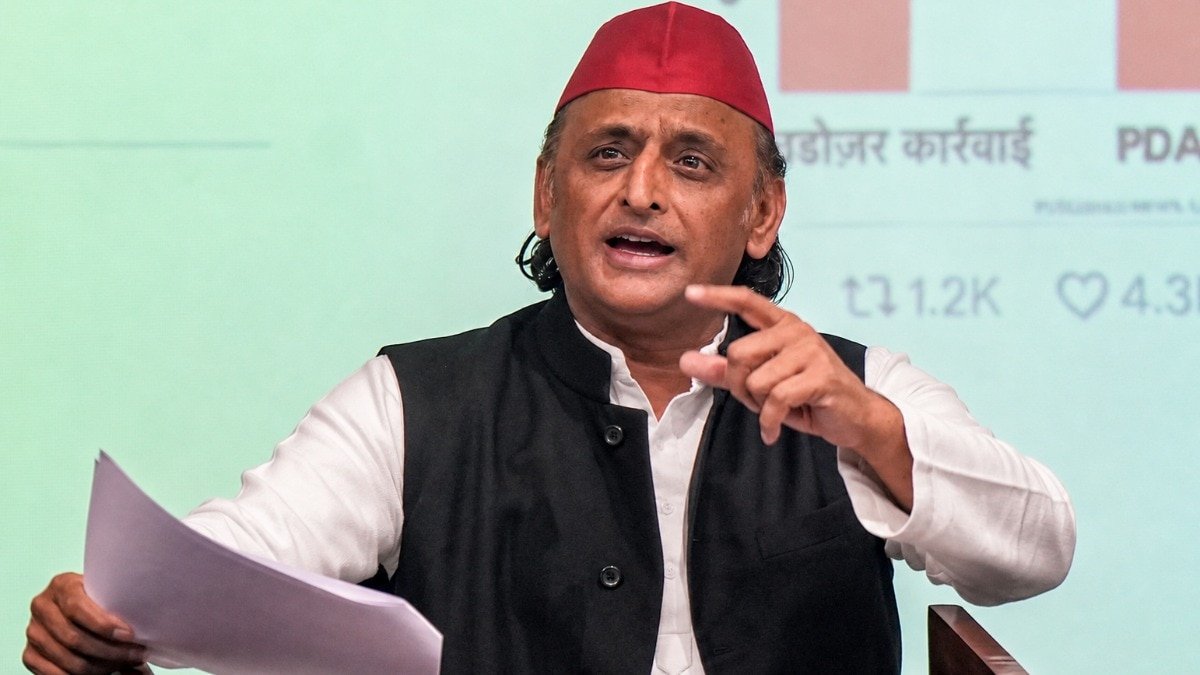
The political buzz over a possible split in the Samajwadi Party (SP) has intensified after a series of provocative claims by BJP leaders and allies, even as the Akhilesh Yadav-led party dismissed the speculation as a calculated attempt to dent its morale ahead of the 2027 Uttar Pradesh Assembly elections.
The speculation gathered momentum on Wednesday when BJP ally and Suheldev Bharatiya Samaj Party chief Om Prakash Rajbhar claimed in a social media post that as many as 30 Samajwadi Party MPs could break away from the party at any moment. Hours later, Uttar Pradesh Deputy Chief Minister Keshav Prasad Maurya appeared to bolster the narrative, asserting that 25-26 SP MPs were ready to switch sides and that the BJP itself was not willing to accommodate them. He further claimed that the Samajwadi Party could face a political collapse more severe than that of the Trinamool Congress after the 2027 Assembly polls.
advertisement
The remarks come amid a period of turbulence within opposition ranks. Following the split among Trinamool Congress MPs and reports that six Shiv Sena (UBT) MPs are on the verge of joining the Eknath Shinde-led Shiv Sena, attention has now shifted to the Samajwadi Party, which emerged as the BJP’s principal challenger in Uttar Pradesh after the 2024 Lok Sabha elections.
Political observers view the growing narrative around a possible SP split as part of a broader BJP strategy to keep its strongest rival on the defensive. With the Samajwadi Party expected to spearhead the opposition challenge in 2027, any perception of internal instability could weaken the party long before voters head to the polls.
The speculation has not been driven solely by BJP leaders. Akhilesh Yadav’s recent comments have also fuelled political chatter. Responding to questions on developments within the Trinamool Congress and Shiv Sena (UBT), the SP chief stressed the need for strong allies to take on the BJP and remarked that only weak people abandon their parties. While the comments were made in a broader political context, some observers interpreted them as a response to growing rumours of defections within the SP.
Samajwadi Party leaders have firmly rejected the claims, accusing Rajbhar and other BJP allies of deliberately spreading misinformation. The party maintains that there is no threat of a split and describes the allegations as politically motivated.
Yet BJP allies continue to amplify the speculation. Nishad Party chief Sanjay Nishad claimed that some MPs exploring a political switch were in touch with him and said he would discuss the matter with the BJP’s central leadership in Delhi.
According to political analysts, the BJP appears to be engaged in a psychological contest with Akhilesh Yadav. At a time when several opposition parties are grappling with internal challenges, projecting the Samajwadi Party as vulnerable and divided could help undermine its credibility as a viable alternative. The objective, analysts argue, is to create a perception that a party battling internal uncertainty would struggle to mount an effective challenge to the BJP.
The Samajwadi Party, however, sees the controversy through a different lens. Its leaders argue that the BJP is attempting to shift attention away from the alleged Ayodhya donation theft controversy and has therefore launched what they describe as a campaign of misinformation and political distraction.
Observers also note that recent developments within opposition parties have had wider implications for the INDIA bloc. Reports of instability in the Trinamool Congress and Shiv Sena (UBT) have contributed to an atmosphere of uncertainty, making it easier for the BJP to push narratives questioning the unity and resilience of opposition forces.
Despite the sustained speculation, many political experts believe engineering a split within the Samajwadi Party would be far more difficult than the BJP’s rhetoric suggests. However, they caution that even unsubstantiated rumours can carry political costs. In their view, the immediate objective may not be to trigger defections but to sow doubt, weaken organisational confidence and keep the opposition leadership under pressure.
The discussion did not begin with Rajbhar’s remarks alone. Political circles in Uttar Pradesh have been abuzz for days with speculation surrounding a handful of Samajwadi Party MPs. In particular, rumours involving an eastern Uttar Pradesh MP, who has faced corruption allegations in the past and was previously associated with the BJP, have further fuelled the chatter and provided fresh ammunition to the ruling alliance.
While the Samajwadi Party continues to reject suggestions of a split and insists its ranks remain united, the BJP’s narrative has succeeded in keeping the issue at the centre of Uttar Pradesh’s political conversation. Whether there is a genuine threat of defections or merely an elaborate political mind game remains a subject of intense debate.
– Ends
SOURCE :- TIMES OF INDIA