Source : Perth Now news
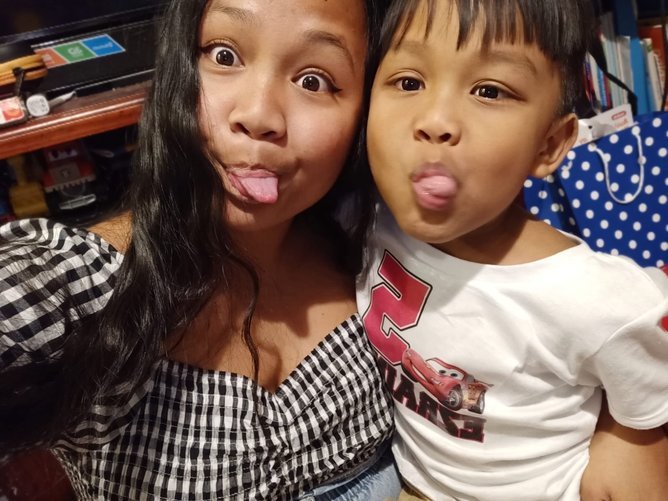
Just over three years ago, Ezraine Aung was an intelligent, active five-year-old who loved cars and playing with his older brother Shayne.
One day life took a sudden and shocking turn for the Perth schoolboy and his family.
Ezraine was diagnosed with childhood dementia, a devastating condition that has quickly stripped this young boy of most of his faculties.
Now aged nine, Ezraine cannot see, speak, move or eat.
Ezraine has the genetic metabolic disorder X-ALD, which is causing his dementia, and no cure or treatment is available for him in Australia.
Like all types of childhood dementia, most sufferers do not live to adulthood.
Childhood dementia is severely under-researched, but Telethon funding is helping WA scientists and health professionals to improve the lives of these children and the dire prognosis they currently face.
Ezraine’s mother Lizzie Mabalay will never forget the terrifying day in May 2023 that their lives changed forever.
“We took him to ED because he was having flu-like symptoms,” she said. “We thought it was just like a cold. But Ezraine had said, ‘Mama, your face is blurry’ and I thought ‘well that’s not right’.”
Brain scans and blood tests revealed the horrific news that Ezraine, who had no previous health problems, was displaying symptoms of childhood dementia.
“I went on Doctor Google and I expected things like mobility and vision issues to come later on. But for Ezraine, the progression was very fast,” she said.
Ezraine was discharged from hospital two weeks later and returned to school, with the help of an education assistant because of his vision problems.
Ms Mabalay said Ezraine was managing well but within another two weeks, he began to show issues with his speech and swallowing.
Tragically now three years on Ezraine relies on his hearing to communicate by blinking; lots of blinks for yes or one slow blink for no.

His family and carers use a book of letters and pictures to say words or letters that Ezraine selects by blinking.
“At the moment, his seizures and dystonia (muscle spasms) are quite stable and managed,” Ms Mabalay said.
“We got a little giggle out of him yesterday because we were singing happy birthday to Shayne. We rarely get any giggles. He gave this little squeal.”
Shayne is 11 years old and Ms Mabalay and her partner Htut Aung also have two-year-old Graciella.
“Ezraine used to play with me. It makes me feel sad because I didn’t know it was going to be gone until I lost it,” Shayne said.
Ezraine enjoys listening to Shayne playing Minecraft which they used to do together.

Ms Mabalay recalled how Ezraine fantasised about having a baby sister before Graciella was born, drawing pictures of her alongside his mum, dad and brother.
“In the beginning of his pre-primary year, he was telling everybody that he had a baby sister. I wasn’t even pregnant then,” she said.
Now he loves having two-year-old Graciella there to blow bubbles on him or give him stickers.
Ms Mabalay described Ezraine as “the glue of our family”
“His middle name is Shwe. In Burmese, it means gold or golden because he’s like a golden baby. We used to tell him that everything he touches turns to gold,” she said.
“It’s difficult because not only are we navigating everyday struggles, but life is still turning and his friends are growing. He means everything to our family.”
The family has NDIS-funded nurses to care for Ezraine on weekdays and he has regular therapy, including hydrotherapy which he loves.
The rest of Ezraine’s care is provided by his family.

“It’s very much up and down,” Ms Mabalay said. “I think when Ezraine is well, everyone in the house is okay and not so stressed out.”
Nicola Goddard, a Telethon-funded paediatric community neurological nurse at the Neurological Council of WA, helps to coordinate the services and support that Ezraine needs, relieving his family of that burden.
“Childhood dementia is certainly something we’re seeing. It’s quite common, just not very well known,” she said.
“As it progresses, they lose skills they have learned. Like with elderly people, they have neurological decline. That’s what Ezraine is going through at a very young age.
“Previously he could talk, walk and play. He was a normal little boy. Now he can’t see or walk and it’s happened relatively drastically and quickly.
“It’s a case of getting supports in place to slow the decline and getting into clinical trials.”
Prashant Bharadwaj, a University of WA senior research fellow, has been doing Telethon-funded research into childhood dementia.
“Around 180 genes are involved in a broad way in childhood dementia, but if you look at the mutations within each gene, we are talking thousands of variations,” he said.

“Collectively it’s not rare anymore.”
Dr Bharadwaj said his current research had shown that a lot of neurodegenerative blood biomarkers in adult dementia were also seen in childhood dementia.
“The progression is faster in childhood dementia, because Alzheimer’s and Parkinson’s take decades to develop,” he said.
“But with childhood dementia you are looking at very severe conditions within a few years.”
Dr Bharadwaj is also working on developing cell lines, which are stem cells grown in a laboratory from an original sample that can be kept long-term and multiplied as needed, from childhood dementia sufferers.
These will be used to test potential treatment for childhood dementia, such as antisense oligonucleotides (ASOs) or “gene-patching” therapies.
“You need to develop these ASOs and then test them in a model before you can go and do a clinical trial so the best platform to test these things are patient-derived cell lines,” he said.
“With the Telethon grant, we made six cell lines from six childhood dementia patients and we should start testing next year.”
Last month, the miraculous story of nine-year-old Perth girl Tilly Page made global headlines.
Tilly had been diagnosed with childhood dementia as a baby and underwent gene therapy as part of a clinical trial when she was just over 12 months old.
Now eight years later, Tilly is showing no signs of dementia and the treatment has been heralded a success.
While it is hoped that Tilly’s case will open doors for other children with dementia to receive similar treatment, it is probably still years away.
Ms Mabalay said neurological conditions were not often talked about and navigating a loved one through one was extremely difficult.
She said she hoped that a gene therapy targeting X-ALD that was approved in the US in 2022 would also be made available in Australia.
A new screening program for X-ALD was launched in WA in August in which babies’ blood will be tested soon after birth.
“By identifying affected babies at birth, we can intervene much earlier and provide families with access to specialist care before significant symptoms develop,” Maina Kava, consultant paediatric neurologist at Perth Children’s Hospital, said.
The Childhood Dementia Initiative, which is supported by Telethon, said one in 2900 babies are born with a condition that causes childhood dementia and half of them will die before the age of 10.
It is estimated that 91 people die of childhood dementia in Australia every year.
The Childhood Dementia Initiative said there were 92 deaths from childhood cancer (aged 0 to 14 years) in Australia every year, but that per patient, childhood dementia attracts 12 times fewer clinical trials than childhood cancer.
Ms Mabalay’s hopes for Ezraine are pure, simple and loving — what his family and his carers strive for every day.
“I would love for him to stay stable, away from the hospital, happy and healthy, and not be limited by his disease,” she said. “And for him to be included in everything.”