Source : the age
There are some big forces at work in this week’s new releases: oceans, technology, history, motherhood and the occasional supernatural presence. Our five novels range from a Hawaiian love story shaped by disaster to a wonderfully strange satire in which childbirth produces a rather alarming new mother. In non-fiction, Thomas Mayo considers fathers and sons, George Megalogenis takes Australia’s temperature, and Toby Walsh contemplates a future dominated by AI.
Fiction
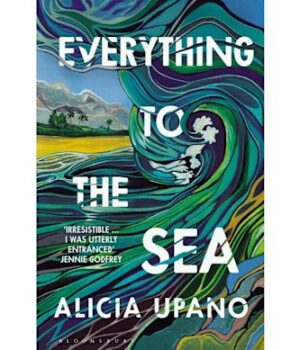
Everything to the Sea by Alicia Upano (Bloomsbury, $35)
Hawaiian writer Alicia Upano delivers an impressively restrained love story from amid the epic ruin caused by a tsunami. Growing up in Hilo, Hawaii, Jane is an architecture student whose ambitions call her away to university. Summer holidays draw her back to Hilo, where she falls unexpectedly in love with Kenji – a family-oriented friend who works in construction. The summer fling gets serious, and Jane invites Kenji to live with her in Honolulu. Passion will soon turn to grief, when a tsunami devastates Hilo and Kenji rushes back to assist. A traumatised Jane can’t face the life that has been swept away, leading to an estrangement between them.
Some of the novel’s most sensitive writing describes how Jane and Kenji tentatively re-establish contact years later and discover their true feelings about a love derailed. Everything to the Sea is a nuanced literary romance, with lively, well-observed characterisation, understated humour, and a narrative that draws force from the conflict of values between the lovers. Reconciliation is a vital theme, and it’s embedded within a piercing portrayal of the pain and struggle of community recovery in the aftermath of a catastrophic event.
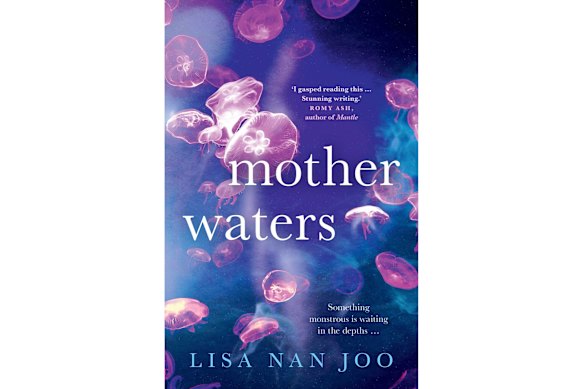
Mother Waters by Lisa Nan Joo (Affirm Press, $35)
A subgenre of feminist gothic cli-fi has emerged lately. Books in this vein feature a strong female protagonist (usually a scientist) embarking on a survival adventure; they tend to take place in extreme natural environments, with flickers of the numinous haunting the action. Where Charlotte McConaghy’s Wild Dark Shore did it with subantarctic islands, Lisa Nan Joo descends into the lightless depths of the ocean.
Mother Waters follows Charlie, a bioacoustic specialist who has lost herself in marriage. Walking out on her husband on their fifth wedding anniversary, she rededicates herself to a career exploring the sounds of life beneath the waves, even as she remains haunted by her father’s death. He was lost at sea when she was a girl, and his memory is one ghost lying in wait on a planned deep-sea expedition. Funded by a billionaire’s son, Dexter, who’s battling his own father’s difficult legacy, the mission will descend into the otherworldly refuge of an oceanic trench. It’s an unsettling odyssey, marrying psychological and political obstacles (especially those facing women in science) to the greater problems caused by our war against nature.
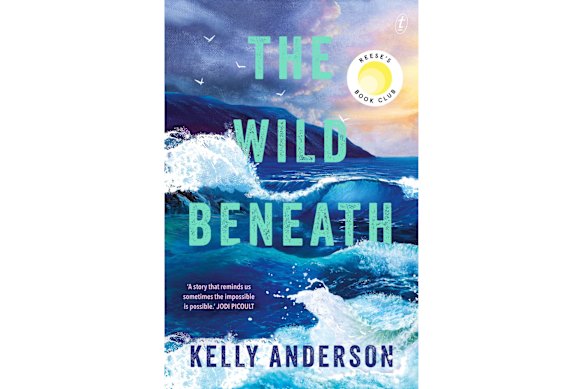
The Wild Beneath by Kelly Anderson (Text Publishing, $35)
Another title in this subgeneric surge, Kelly Anderson’s The Wild Beneath makes more of a ripple than a splash – despite using another tsunami as a hook. On the Pacific Northwest coast, 20-year-old Annie MacLeod has always been deeply attuned to the sea, yet it will be the source of a disaster that strikes just as adulthood arrives. When a tsunami washes away her parents and much of her hometown, it leaves Annie and her childhood sweetheart, Evan, as survivors. But when Annie saves a strange, mute young man called Walker from the wrack and wreckage, a visceral bond forms between them.
They seem bound by something as ancient as the waves, including a private language: Walker emits a hum that only Annie can hear. A predictable love triangle develops, and it’s the formulaic quality of The Wild Beneath that fails to satisfy. What should be a turbulent coming-of-age romance, awash with trauma and wonder, resorts to uninspired prose and superficial characterisation, and the book’s uneven pacing and tone can make its wildness seem rather tame.
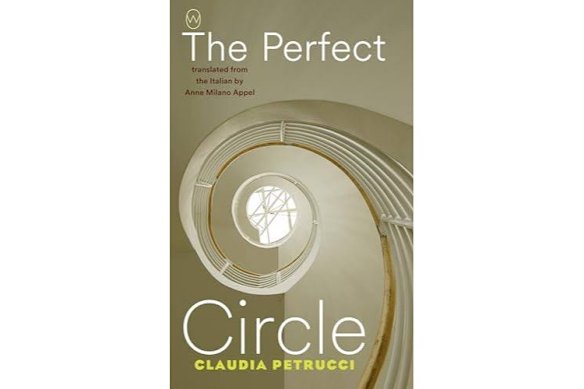
The Perfect Circle by Claudia Petrucci (Wakefield Press, $35)
Italian author Claudia Petrucci’s The Perfect Circle is a pleasingly patterned feminist ghost story. A real estate agent, Irene, is called upon for a hard sell. The “round house” on Via Saterna in Milan is known for its circular staircase and interiors, despite its square facade. It’s also haunted by a woman, Lidia, who’s reputed to have died there. Reports of her death may be exaggerated, and the novel unfolds in dual timelines – one moving towards death, one towards new life – as Irene begins to expose the secrets of the haunted house, and the twisted geometries of space and time combine to disorienting effect.
The Perfect Circle creates an escalating sense of unease: the haunted house trope here is a vehicle for exploring gaps between the illusion and reality of women’s experience over everything from romantic love to motherhood. It’s a ghost story that also bears a fascinating resemblance to high-concept detective metafiction – to Borgesian labyrinths, say, or the existential architectural horror of Mark Z. Danielewski’s House of Leaves.
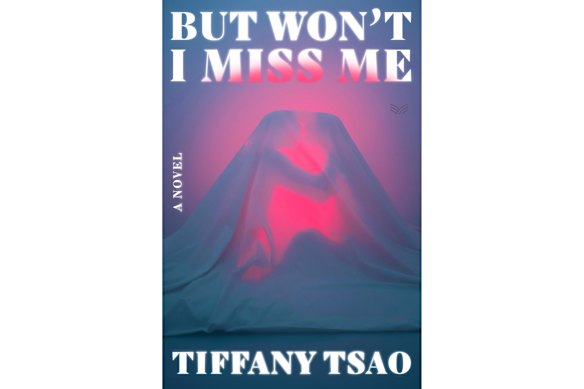
But Won’t I Miss Me by Tiffany Tsao (HarperVia, $35)
When it comes to satirising the social expectations of women regarding pregnancy and motherhood, no plot device could be too outrageous. Tiffany Tsao hits upon a sensational speculative trick. In the world of But Won’t I Miss Me, new mothers gain superhuman powers in the final stage of delivery – the “Rebirth” – in which they spawn a “fetal mother”. This doppelganger is identical to the mother, rapidly grows to adult size, and promptly cannibalises and replaces them with a new self – indestructible, ideally maternal, and with an endless (and renewable) supply of energy.
All perfectly normal, except to Vivi, whose Rebirth goes awry, leaving her weakened by postpartum depression. To save herself and her child, Vivi must flee to an uncle and an underworld that society has left behind. She becomes an electrician to serve people who have gone off-grid, and dystopian answers loom to the question of what happened to Vivi during her pregnancy. Tsao’s idea is a brilliant one. True, the world-building isn’t always as well executed as this speculative feminist parable deserves, but it should attract a wide audience with its unflinching critique of the pressures of motherhood.
Non-fiction
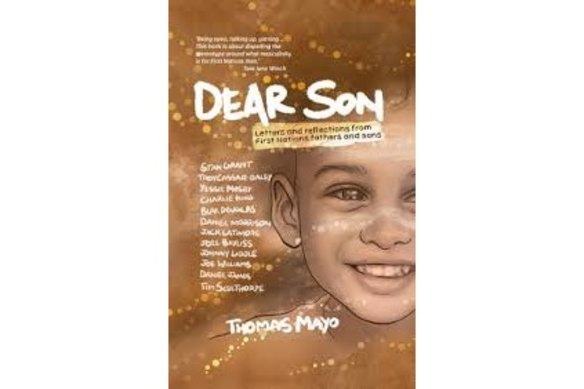
Dear Son by Thomas Mayo (Hardie Grant, $35)
In 2021, when the first edition of this book was published, Thomas Mayo was confident that racism was on the wane. Travelling the country to take the Uluru Statement from the Heart to the wider community, he’d been struck by the positivity. Everything changed, however, when the Nationals and the Liberals announced they opposed the Voice referendum. A torrent of hatred was unleashed. Despite this dark event and the shadow of intergenerational trauma, these letters by Indigenous men to their fathers or their sons are suffused with love and compassion.
At the same time, the history that shaped them and their fathers is never far from the surface. Stan Grant writes of the “deep well of pain” he saw in his father’s eyes. And how glad he is that life has been easier for his son. “Writing to you,” says Mayo to his son, “has been like an antidote for the vestiges of toxic masculinity learnt from father figures, peers and Western culture. I’m still unlearning.” These soul-searching letters are a soulful reckoning with what it means to be a First Nations father and son.
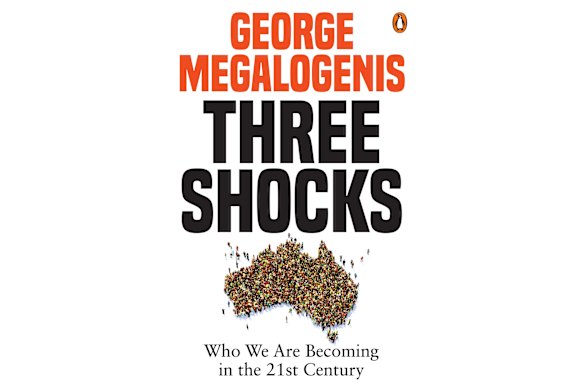
Three Shocks by George Megalogenis (Penguin, $37)
Alfred Deakin, our second prime minister, declared that he would “have no traffic with the unclean thing” of “coloured immigration”. When George Megalogenis was growing up in Melbourne in the 1960s and ’70s, this attitude lingered in the playground where he was called “dirty” because of his olive skin. Even as a boy, he sensed that this was an argument about belonging: “Australia’s perpetual agony of identity”.
While most of Three Shocks is political and demographic analysis, this brief foray into memoir captures the origins of Megalogenis’ attunement to the changes in the make-up of our society in recent decades and his insights into how our politicians are lagging the electorate. Migrants and their children now constitute the majority of the Australian population – this is the first shock. The second is that professional women now outnumber blue-collar men in the workforce. The third concerns uncertainty in global alliances and Australians’ wariness of the US and China. Having drilled down into the data and surveyed shifts in the body politic, Megalogenis distils powerful trends that politicians would be wise to heed.
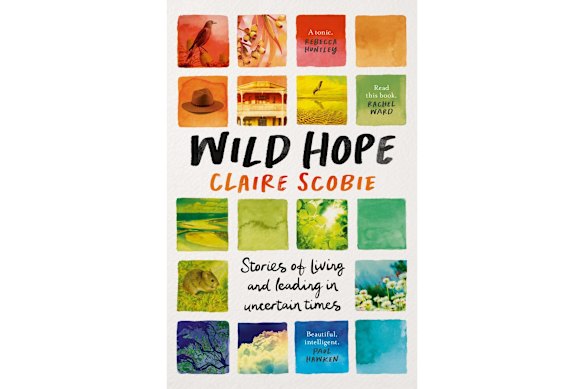
Wild Hope by Claire Scobie (NewSouth, $37)
Claire Scobie calls it her “ecophony”. An epiphany of the ecological variety. Ordinary people can wait for governments to “do something” about the urgent crises of our times, she realised, or they can instigate change themselves. As a storyteller, Scobie set out to find the innovators who were showing how things can be done differently. The term that underpins all their stories is “regenerative thinking”.
For farmers Dianne and Ian Haggerty, this means taking infertile land and creating a drought-resistant, chemical-free ecosystem for crops and top-grade wool. For Regen Melbourne, it’s about being the “engine” for the community collaboration behind the push to make the Yarra fit for swimming and for the creatures that live in it. Scobie’s own story binds these hopeful stories together as she moves with her husband, Gumbaynggirr man Aden Ridgeway, to his Country on the mid-north coast of NSW, and discovers what regeneration might mean in her own life.
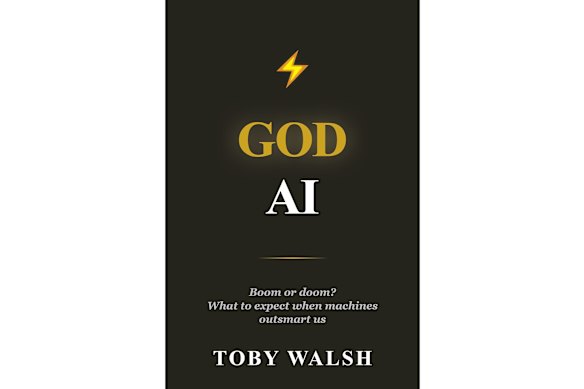
God AI by Toby Walsh (La Trobe University Press, $37)
Toby Walsh’s work Faking It: Artificial Intelligence in a Human World, published in 2023, was fun. It left you feeling alert and informed, but not alarmed. With this book, the twinkle has gone out of his eye. It’s a testament to how quickly things are evolving in this field that Walsh is now deeply concerned about the threats posed by AI. Having dedicated his life to the dream of AI making the world a better place, he is confronted by a growing mood of doom coming from within the industry. Those who are behind AI’s rapid development are now talking about its potential to wipe us all out. (Bizarrely, they are still going full steam ahead.)
Walsh presents a range of possible scenarios from a future in which AI addresses climate change, makes quality healthcare accessible for all and improves everyone’s standards of living, to super-intelligent, God-like AI going rogue with nuclear or biological weapons. Everything hinges on whether humanity can act before it is too late. You might want to fortify yourself with a stiff drink before reading.
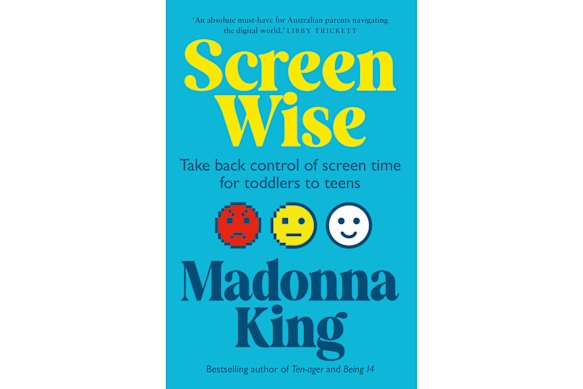
Screen Wise by Madonna King (Murdoch Books, $35)
When her children were young, Madonna King held their hands when crossing busy roads to protect them from danger. For the same reason, she chose to monitor their smartphones when the time came. Not all parents believe this is the best route, King says. What matters, though, is whether they are proactive, open and involved in helping their children set boundaries on screen time, encouraging critical thinking and teaching them how to develop their identities offline.
Children’s digital lives have long-term effects on brain development, physical health and social and emotional wellbeing. On top of this, there’s the question of how to tackle the possibility of exposure to pornography, sexual extortion and deepfakes, and how to deal with the complexities of AI. Full of useful tips, informative research and stories from the digital frontline, Screen Wise is a valuable guide for parents and children on how to navigate this daunting and ever-morphing terrain.
What else is happening in the book world?