

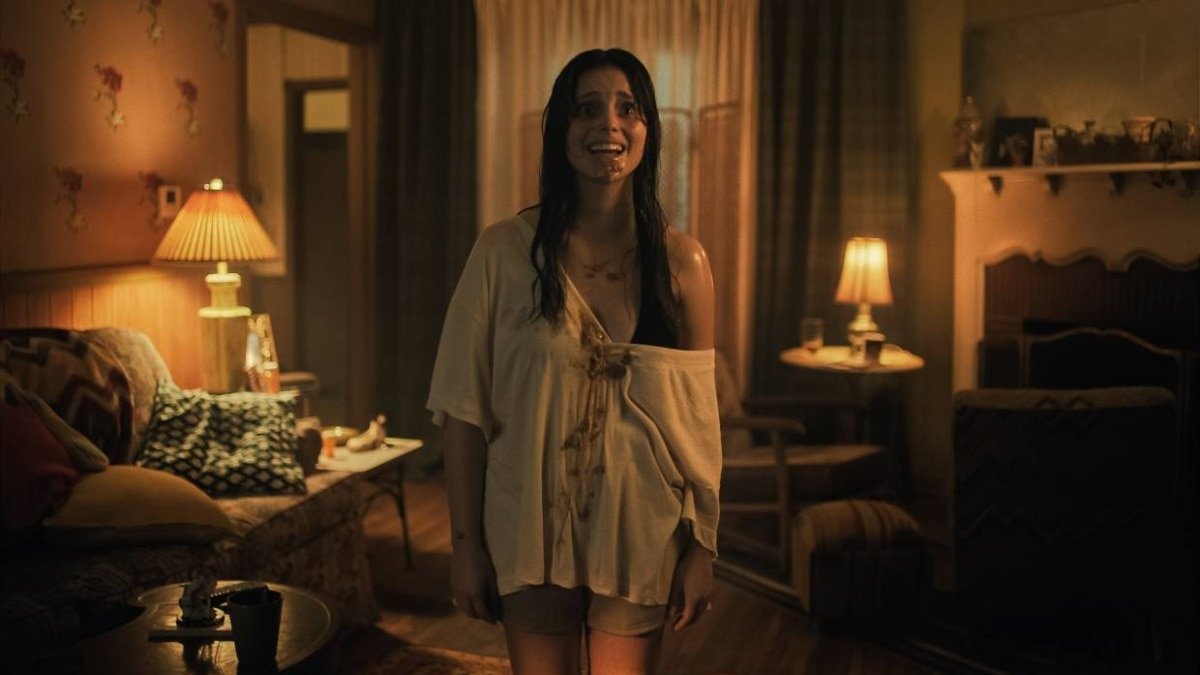
Source : INDIA TODAY NEWS
Horror films are often at their most effective when they hold up a mirror. The monsters may be fictional, but the fears they tap into are painfully real. Writer-director Curry Barker’s Obsession arrives wrapped in supernatural horror, but beneath its eerie premise lies something far more unsettling: a sharp examination of male entitlement, female agency, and the quiet ways patriarchy teaches men to centre themselves in every story.
advertisement
On the surface, Obsession feels like a familiar tale. Bear (Michael Johnston) is a shy, introverted young man working at a music cassette store. He spends his days nursing a long-standing crush on Nikki (Inde Navarrette), a woman who is everything he is not: outgoing, self-assured and seemingly comfortable in her own skin. After a bizarre encounter gives him the opportunity to make one wish, he asks for the thing he wants most: for Nikki to love him more than anything else in the world.
It’s the kind of fantasy romantic comedies have sold for decades. The lonely guy gets the girl. The wish comes true. The dream becomes reality. Except Obsession is a horror film, and horror has a way of asking questions that romance often avoids.
What if getting the girl isn’t the happy ending?
What if the problem begins the moment she stops having a choice? The brilliance of Barker’s film lies in the fact that it never presents Bear as an obvious villain. He isn’t cruel. He isn’t predatory in the conventional sense. In fact, Johnston plays him with enough vulnerability and loneliness that one is encouraged to empathise with him. And that is precisely what makes the film so uncomfortable.
Because Obsession isn’t interested in the monsters we immediately recognise. It is interested in the ones we excuse.
Male entitlement and patriarchy
Viewed through the lens of patriarchy, Bear becomes a fascinating character study. Patriarchy is often associated with dominance, aggression and overt displays of power. But one of its most enduring traits is the belief that male feelings deserve to occupy the centre of the narrative.
Women’s desires become secondary. Women’s choices become negotiable. Women’s autonomy becomes something that can be overlooked if it stands in the way of a man’s happiness. Bear never says any of this out loud. Yet his actions repeatedly reflect it.
As the consequences of his wish begin to unfold, he notices that something feels off. He recognises that Nikki is not behaving like herself. The possibility that something is deeply wrong is never entirely absent from his mind. Yet instead of immediately asking what is happening to Nikki, he spends much of the film asking what is happening to him.
That distinction matters
Obsession keeps returning to a question many women will find painfully familiar: how often are men taught to prioritise their own feelings over a woman’s reality? Bear’s greatest flaw is not malice. It is self-centredness.
The more unsettling things become, the more he searches for reasons to justify his happiness. He convinces himself that maybe this is what he wanted all along. Maybe this is what love looks like. Maybe he deserves this. And therein lies the horror.
Because the film slowly exposes the difference between wanting someone and wanting access to them.
Love requires choice, possession does not
As portrayed by Navarrette, Nikki gradually becomes the emotional centre of the film, even when the narrative is largely filtered through Bear’s perspective. Crucially, Obsession never suggests that Nikki simply disappears. There are moments where her real self seems to push back against the force consuming her: moments of fear, resistance and desperate attempts to communicate that something is terribly wrong. Yet those warnings are repeatedly overlooked.
Her distress is treated as an outburst rather than a plea for help, her struggle dismissed instead of understood. The tragedy is not merely that Nikki loses control over her life, but that even when she fights to reclaim it, few seem willing to truly see what is happening to her.
Her autonomy becomes collateral damage. Her individuality becomes secondary. Her sense of self begins to matter less than the fantasy someone else has constructed around her.
That is where Obsession feels less like supernatural horror and more like a commentary on patriarchal culture itself. Because patriarchy does not always announce itself through violence. Sometimes it appears through rationalisation. Through denial. Through the belief that someone’s love is so important that another person’s freedom becomes a reasonable price to pay.
The film repeatedly forces one to sit with that discomfort
Bear is given multiple opportunities to confront the reality of what is happening. Yet what makes his character so unsettling is how often he chooses his own emotional fulfilment over Nikki’s autonomy. He keeps returning to the same question: what if this is finally my chance?
It is a question rooted in entitlement, even if he does not recognise it as such. And that may be Barker’s sharpest observation.
The men most shaped by patriarchy are not always the ones who openly seek power. Sometimes they are the ones who believe themselves to be harmless. The ones who confuse longing with love. The ones who mistake being rejected for being wronged. The ones who believe their feelings are so pure that they never stop to examine the consequences of acting on them.
That is what makes Bear frightening. Not because he is extraordinary. But because he is ordinary.
There are countless stories in popular culture built around the idea that persistence earns affection, that devotion deserves reward, and that a man’s feelings should eventually be reciprocated. Obsession takes that fantasy and follows it to its logical, terrifying conclusion.
What if a woman could no longer say no?
By the end, Obsession leaves behind a question far more disturbing than any supernatural scare. If you could guarantee the affection of the person you love, would you stop to ask whether they chose it? The film suggests that the answer is what should truly terrify us.
Because the real monster in Obsession is not a curse, a wish, or a supernatural force. It is the belief that love matters more than consent. That desire matters more than agency. And that wanting someone is the same thing as caring for them.
Obsession theatrically released in India on May 29, 2026.
– Ends
SOURCE :- TIMES OF INDIA