Source : INDIA TODAY NEWS
A total solar eclipse darkened skies across parts of the Northern Hemisphere on August 12, offering millions of people a rare glimpse of one of astronomy’s most dramatic phenomena and marking mainland Europe’s first total solar eclipse since 1999.
The eclipse unfolded over several hours as the Moon moved directly between Earth and the Sun, casting a narrow shadow across parts of Greenland, Iceland, northern Russia, Spain and a small section of Portugal. Observers within this path witnessed totality, while a much larger region across Europe, northwestern Africa and parts of northeastern North America experienced a partial eclipse.
advertisement
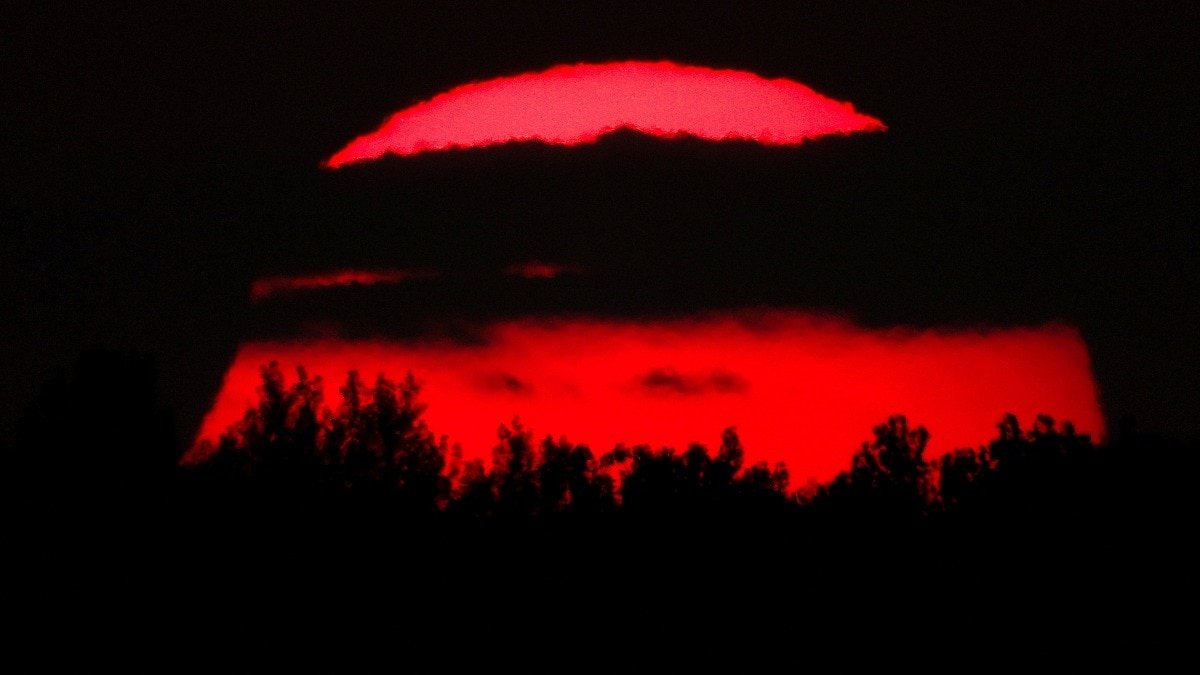
At the peak of the event, totality lasted up to about two minutes and 18 seconds near the center of the eclipse track. In parts of Spain and western Europe, the eclipse coincided with sunset, creating the rare spectacle of a “sunset eclipse” as the partially obscured Sun dipped below the horizon.
The event began with partial phases at 15:34 GMT and concluded globally by 19:58 GMT, travelling thousands of miles and drawing skywatchers, photographers and scientists to prime viewing locations.
For Europe, the eclipse carried special significance. It was the first time in nearly three decades that people in parts of central and western mainland Europe were able to witness a total solar eclipse, reviving memories of the widely observed 1999 event.
India was not among the regions that could observe the eclipse, as it occurred during nighttime hours across the country and fell outside the eclipse’s visibility zone.
Beyond its visual appeal, the eclipse also provided scientists with a valuable opportunity to study the Sun. During totality, the Moon completely blocked the Sun’s bright surface, revealing the faint outer atmosphere known as the corona. Because the corona is usually hidden by the Sun’s intense light, total solar eclipses offer researchers a rare chance to examine its structure and behaviour.
Although the period of total darkness lasted only minutes, the scientific observations collected during the event are expected to contribute to ongoing research into solar activity and its effects on Earth.
The August 12 eclipse was the only total solar eclipse of 2026, making it one of the year’s most anticipated celestial events.
– Ends
SOURCE :- TIMES OF INDIA