Source : Perth Now news
“For the first time in history, we, the people of Hong Kong, will be master of our own destiny.”
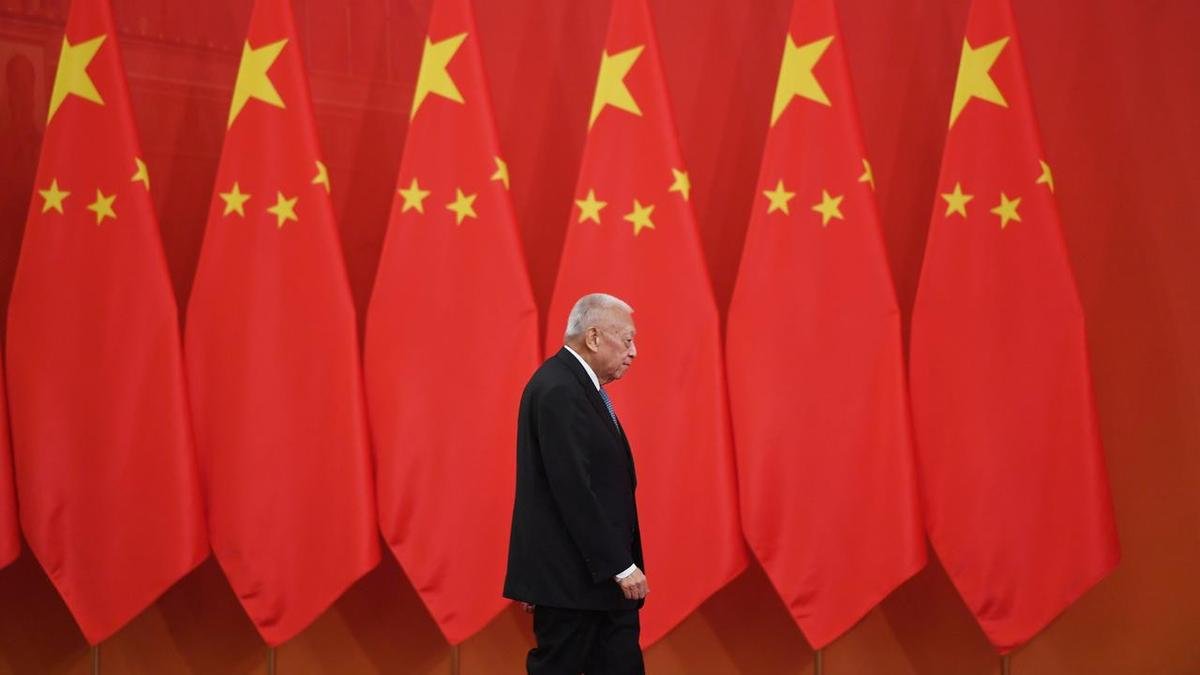
On July 1, 1997, Tung Chee-hwa delivered his first speech as chief executive of the territory, following its handover from the United Kingdom to China.
“The Special Administrative Region Government is fully committed to preserving the Hong Kong way of life, maintaining Hong Kong’s free and open economic system, upholding the rule of law, and building a more democratic society,” he said.
Six years later, Tung sought to push through Article 23. The proposed security law, covering offences like treason and sedition while expanding police powers, was widely seen as Chinese encroachment on Hong Kongers’ freedoms.
It triggered a half-million-strong protest, with many demonstrators wearing black as a sign of mourning.
Tung backed down. But the events of 2003 set the stage for increased tensions between opposition democrats and Beijing over the city’s future.
A former shipping tycoon, Tung Chee-hwa led Hong Kong as it emerged from more than 150 years of British colonial rule and adopted the “one country, two systems” principle, whereby the territory rejoined China but was afforded a high degree of autonomy from the mainland authorities.
His time in office also showed the limits of that principle.
He died on Tuesday aged 89, South China Morning Post reported, citing a statement from his office. No cause of death was given.
The scion of Orient Overseas Container Line, an international shipping empire founded by his father, Tung enjoyed close ties to China’s leaders during the 1990s, including then-President Jiang Zemin.
In December 1996, Tung was chosen by a 400-person committee stacked with Beijing loyalists to become the city’s first leader under Chinese rule.
“We will maintain Hong Kong as a vibrant and international city,” Tung said in his inaugural speech.
But Tung, who lacked any previous political experience, soon struggled with the demands of public office and he resigned two years later, halfway through his second term, citing ill health.
Tung Chee-hwa was born in Shanghai in July 1937, the son of shipping magnate Tung Chao-yung and Koo Lee-ching, herself reportedly the daughter of a prominent shipowner. The family moved to Hong Kong when he was a child.
As an adult, he spent significant time in the West, attending the University of Liverpool in England, during which time he became a lifelong supporter of Liverpool Football Club. In the US, he worked for General Electric and later the family business.
After stepping down as Hong Kong’s leader, Tung was given a second lease of political life when he was appointed as a vice chairman of the Chinese People’s Political Consultative Conference, China’s top political advisory body.
He was considered influential behind the scenes.
Tung and his father had been longtime friends of former US President George Bush, with the younger Tung also building a rapport with President George W Bush.
But Tung’s elder-statesman credentials as a bridge between the two countries waned as bilateral relations began to worsen.
In recent years, Tung largely disappeared from the public eye.
In one of his last interviews, with the Chinese Communist Party-aligned People’s Daily newspaper, he backed a 2021 overhaul of the city’s electoral system that effectively shut out opposition democrats from future elections.
“The ultimate test for any method of election is whether it brings happiness and wellbeing for the people,” Tung said.
“But only restoring social stability is not enough. We now need to strive for prosperity.”