Source : INDIA TODAY NEWS
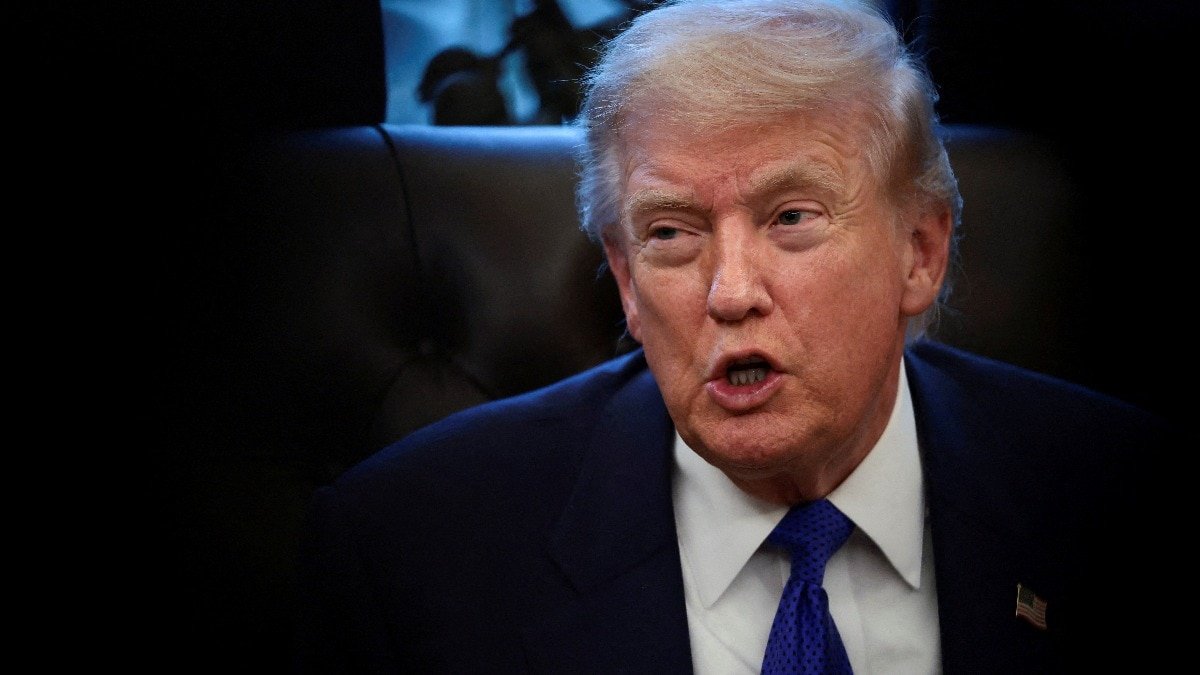
US President Donald Trump appears to be backing away from another major military offensive against Iran. Washington may increase economic pressure as Tehran continues to resist demands over the Strait of Hormuz. In a brief phone interview with Axios on Sunday, Trump struck a notably restrained tone after weeks of threatening a major escalation against Iran. Rather than issuing fresh military warnings, he said his administration was taking a lower-key approach while watching Iran’s worsening economic situation.
advertisement
“We are low keying it. We are only semi-negotiating with them. We are just watching Iran with its huge inflation and the fact they have no money,” Trump said.
According to him, Iran “is in very bad shape” economically and lacks the money to pay its troops. The US naval blockade has further intensified the pressure on Tehran’s economy, he said.
The President has repeatedly said that he was persuaded to hold off on another large-scale military campaign by his Gulf allies and instead allow economic and diplomatic pressure to build.
TRUMP LOOKS TO ECONOMIC PRESSURE
The change in tone was also evident in Trump’s response to Tehran’s delay in finalising an agreement with Oman on traffic through the Strait of Hormuz. Iran announced additional conditions on Saturday for allowing shipping through the strategic waterway, but the latest US response has been notably restrained.
Rather than issuing fresh military threats, Trump has appeared willing to let the economic pressure play out. His calculation is also shaped by the fact that oil prices have remained relatively manageable for American consumers.
With crude trading at slightly more than $75 a barrel, the immediate economic fallout of the conflict has been less painful for US consumers than it could have been. That gives Washington greater room to maintain pressure on Tehran without rushing into another major military escalation.
“It will work out. It always works out. It’s like a chess game,” Trump said.
HORMUZ DEAL HITS ROADBLOCK
An agreement involving Iran, Oman and the United States has reportedly been negotiated to govern traffic through the Strait of Hormuz. However, the arrangement has yet to be formally announced.
Under the proposed framework, Iran would receive partial control over traffic through the waterway — a concession it did not have before the war. Qatari and Pakistani mediators had earlier expected the agreement to be announced, but those expectations have since faded as disagreements have emerged over Tehran’s demands.
Iranian authorities have now added conditions that go well beyond the original discussions. Mohammad Bagher Zolghadr, head of Iran’s Supreme National Security Council, said on Saturday that the United States must permanently end the war, lift its naval blockade and withdraw military forces from around Iran before Tehran would agree to reopen the strait.
He also demanded an end to US sanctions, the release of frozen Iranian assets and compensation for war-related damage. Zolghadr further called for an end to US threats and what he described as insults against Iran, as well as an end to American military action against Iran’s regional allies.
US has rejected Iranian restrictions on shipping through the strait, including any attempt to impose tolls on commercial vessels.
TRUMP’S NEW CALCULUS ON IRAN
The latest series of developments have complicated the Trump administration’s efforts to find a way out of the conflict without appearing to retreat. The Wall Street Journal has reported that Trump has indicated to senior aides that he could potentially walk away without securing a new nuclear agreement with Tehran if Iran fully restores shipping through the Strait of Hormuz.
That would represent a significant shift in the US approach. The nuclear issue has been central to Washington’s demands for months, but negotiations over Tehran’s nuclear programme have proved difficult.
Trump believes Iran could struggle to rebuild its nuclear capabilities during his presidency following the destruction of major nuclear facilities. He has also said that US intelligence agencies would detect any attempt to secretly rebuild the programme.
The president has separately downplayed concerns over Iran’s buried uranium stockpile.
“We’ve already got the nuclear material, because it’s so far underground,” Trump said during a July summit of the North Atlantic Treaty Organization. “Nobody’s going to be able to get it except us.”
That thinking could give Trump greater room to prioritise the reopening of Hormuz over securing a comprehensive nuclear agreement.
– Ends
SOURCE :- TIMES OF INDIA