source : the age
Amanda Curtin
In January–February 2012 I spent several weeks as a tourist in Paris, experiencing apartment living in an interesting quartier, walking the streets like a true flaneur (turning left, and left, and left again), visiting galleries and famous department stores and generally delighting in everything that this culturally rich, historically fascinating city has to offer.
The only thing remotely challenging was the weather: an extreme cold wave had begun sweeping through Europe two days before I arrived.
Getty Images/iStockphoto
France was far from the worst affected country (many people died in others), but Paris was freezing. I’d spent a month at a writing residency in rural Scotland in the previous northern winter and that didn’t even come close.
And I think it was the weather that made me more aware of the existence of another Paris: people sleeping rough in métro stations, in doorways, on icy streets over métro vents emitting warm air. This Paris sat in stark contrast beside the Paris of tourist indulgence that I, from my privileged position of comfort and safety, was experiencing.
Those impressions lived on in my mind after I returned home and became the seeds for my novel Six Days, set during that same bitterly cold winter. I wanted to make visible and enduring this other Paris I had glimpsed.
During the course of my research for the book, I learned that in the 2007 French presidential election campaign, Nicolas Sarkozy made an election promise that within two years of his being elected, no-one would be forced to sleep on the streets – which brought to mind Bob Hawke’s 1987 pledge to end child poverty by 1990.
Sarkozy won, but from what I’d seen in Paris, his bold promise, like Hawke’s, had obviously not translated into reality. There are no quick fixes with homelessness or poverty.
But the promise itself interested me. Politicians only make such promises when the communities they aspire to serve make clear what they care about, and I discovered that in the winter of 2006–07, a group of young Parisians had done just that.
The group, calling themselves Les Enfants de Don Quichotte, set up 200 red tents for the homeless along either side of Canal Saint-Martin, an upmarket area on the Right Bank. The leaders were media savvy and persuasive public speakers, and at least for a while they succeeded in making invisible homelessness visible.
Lately I’ve been thinking about that issue of invisibility. Because homelessness is ever-present in every city, including my own. Why did it take an extreme weather event in another country for me to really see it?
Perhaps “not seeing” is a symptom of the helplessness individuals feel – that I feel – in the face of a problem so overwhelming, so complex, that successive governments fail to solve it. Do our eyes slide away from the things we can do nothing about, rendering them invisible?
It might be a reason. It’s not an excuse.
At the time of the last census (2021), more than 122,000 people were experiencing homelessness in Australia, 9,700 of them in Western Australia.
More recent figures from the Australian Institute of Health and Welfare show that 25,900 Western Australians received specialist homeless services in 2024–25.
With factors such as the continuing housing crisis and the steeply rising cost of living adding to the many other individual and societal causes of homelessness, the figures today must be higher still.
The critical need for safe, secure, affordable long-term housing can only be tackled at a government level. Organisations such as Vinnies WA, St Bart’s and Ruah Community Services do excellent work in assisting with crisis accommodation, advocacy and outreach services.
But people experiencing homelessness may have many other needs: meals, medical attention, laundry and showering facilities, hygiene products in portable sizes, storage facilities, appropriate bedding, and practical clothing and footwear.
It’s here that we can step up, if we have the means to do it, by donating money or supplies or volunteering our time to organisations who see these other needs and work hard to address them.
In Western Australia, there are many, including Street Friends WA (clothing, footwear, doonas, hygiene products), Street Doctor (medical services), Orange Sky (laundry facilities), Brollie Brigade (showers), Seeds of Hope (meals, food parcels, clothing, blankets) and Footpath Library (books and magazines).
These groups, and others also accredited by the City of Perth, provide rostered services at 158 Royal Street, East Perth – one of several hubs for homelessness services located in and around the city and run by various organisations.
In spite of safe, secure housing being internationally recognised as a basic human right, homelessness persists.
But rather than succumb to those feelings of helplessness, allowing our eyes to slide away, we can take positive action by donating to or volunteering with service groups working directly with people in need.
We can choose to see.
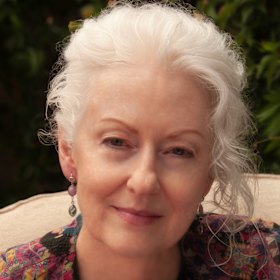
Amanda Curtin is a West Australian author and editor, and her most recent novel Six Days is published this month.
Homelessness Week runs from August 3 to 9.