SOURCE :- THE AGE NEWS
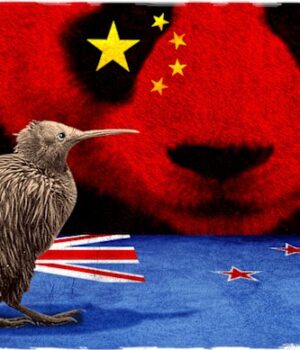
New Zealand’s spy agency has dared utter in its formal annual threat report the word that Australia’s does not. The C-word: China.
In its annual statement of security threats published on Thursday, the New Zealand Security Intelligence Service (NZSIS) said plainly: “There are several states that conduct espionage against New Zealand, but the People’s Republic of China (PRC) is the only country we have detected doing it at scale.”
And it gave details. In one instructive case study, the agency explained how a Chinese company called Purple Mountain Observatory attempted to install a satellite ground station on New Zealand soil. Without telling anyone.
“They worked with a local company that was likely unaware of the equipment’s capability to collect intelligence of military value and would have no idea who was receiving the data.”
Yes, you might ask, but what does a Chinese company have to do with government espionage? The NZSIS reminds readers that China’s system does not allow for its companies to stand apart. The NZ report names China 11 times.
Australia’s equivalent, ASIO chief Mike Burgess, delivers an annual threat assessment. Scour it as you will. You will not find China mentioned this year. Same as last year. And the year before.
Burgess has named China as a threat on other occasions in recent years. But Australian intelligence prefers the safety of speaking as part of a group, signing on to collective statements by the Five Eyes group of intelligence partners. Or staying mum.
So what? “We believe the public conversation matters,” says a NZ expert on Chinese interference and espionage, Anne-Marie Brady of Canterbury University. “An informed public is a resilient public.” By telling the people what’s going on, she says, “New Zealand is trying to disrupt Chinese espionage and interference.”
The NZ report arms citizens by giving them very detailed information on how the People’s Republic of China uses LinkedIn and other recruitment services to hook unwitting jobseekers into handing over secrets, for instance.
Australian expert Alex Joske, head of intelligence practice at John Garnaut’s China consultancy and the author of Spies and Lies, says that “the NZ government is doing a public service with its forthright statements about PRC espionage.
“Clear and direct security advice is immensely helpful for raising public awareness and helping universities, companies and local governments make better decisions in the face of growing PRC covert influence and intelligence activity.”
How is this relevant to Australia? “Whatever China is doing in NZ, you can be sure they are doing in Australia,” says an Australian intelligence expert who prefers anonymity.
“Australia and NZ are both handled by the same division in the Ministry of State Security, so in some cases it will be the same people operating against the two of us.”
Besides, NZ’s spy agency explains that the country’s geography in the Pacific, and as a gateway to the Antarctic, make NZ “not only geopolitically relevant, but also attractive to threat actors”. These factors apply equally to Australia.
Few in Australia grasp this reality. Beijing is not only interested in displacing the US, taking control of Taiwan and asserting hegemony over Asia.
Its ambition is global domination, including control of the Pacific and Antarctica and, incidentally, all of Australia’s environs. China has built science stations with military uses on Australian-claimed territory in the Antarctic, for example, without a peep from Canberra.
NZ is not the exception in naming China as its most potent and hostile opponent. In fact, Australia is the outlier. Among the Five Eyes countries, Australia is the only one that fails to mention China in its annual update as a threat to its national interests.
The Canadian Security Intelligence Service’s latest report puts China at the top of the list of “perpetrators of foreign interference and espionage against Canada”. It discusses Beijing’s activities, including attempts to recruit former Canadian air force pilots to train the People’s Liberation Army Air Force.
Britain’s annual threat update by MI5 chief Sir Ken McCallum cites Beijing’s attempts to “lure UK academic experts”, its efforts at covert interference in British politics and its intimidation of opponents, “as we saw when the Hong Kong Police issued bounties against more than a dozen pro-democracy activists here in the UK”.
The US Intelligence Community annual threat assessment makes dozens of references to China. These include Beijing’s missile and nuclear weapons programs, its Arctic ambitions and its race to overtake the US in AI and quantum computing, and it names China as “the most active and persistent cyber threat to US government, private sector and critical infrastructure networks”.
You can be certain that Australia’s reticence, unique among the Five Eyes, is counted as a win in Beijing. The Chinese Communist Party and its leader, Xi Jinping, are supersensitive to criticism. Lacking legitimacy, it cannot abide the least slight. Not at home and not abroad.
Remember the 14 demands that China’s embassy in Canberra handed to a reporter in November 2020 at the same time as it was imposing $20 billion in punitive trade sanctions on Australia? Of the 14, five were demands that Australia muzzle criticism of the party or China. These included an insistence that Australian members of parliament and media cease “unfriendly” comments about the party. The 14 have never been withdrawn.
The Australian government is cautious in making any reproach of Beijing. Foreign Affairs Minister Penny Wong and Defence Minister Richard Marles can be forthright occasionally. Prime Minister Anthony Albanese has publicly chided Beijing a few times, but only in pretty extreme circumstances, such as China’s recent test firing of a nuclear-capable ballistic missile into the Pacific. Even the tiniest Pacific islands spoke up on that occasion.
And there are always voices in Australia making Beijing’s case. Former prime minister Paul Keating is the Chinese Communist Party’s chief apologist in Australia. On Monday, we learnt that he’s been coaching Albanese in how to deal with Xi Jinping.
According to James Curran’s new book, Grand Ambition, Keating tells Albanese that Australia is at a “fork in the road”. He wants Albanese to choose the road to Beijing, naturally. We’d all be free to use the C-word then. But only to lavish praise.
The last word goes to New Zealand’s Anne-Marie Brady: “We are not afraid.”
Peter Hartcher is political and international editor. His political column appears on Saturdays.
Get a weekly wrap of views that will challenge, champion and inform your own. Sign up for our Opinion newsletter.
 Peter Hartcher is political editor and international editor of The Sydney Morning Herald and The Age.Connect via email.