

Source : Perth Now news
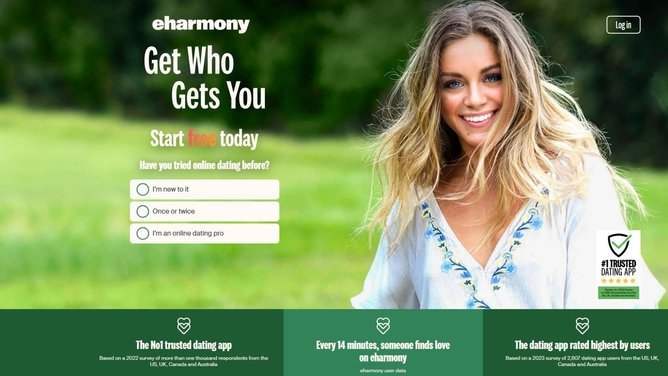
Dating website eHarmony misled hundreds of thousands of Australian subscribers over hidden subscription costs and lengths, the Federal Court has ruled.
The dating company misled people by making it seem like premium subscriptions could be had for six, 12 or 24 months, when in fact the subscriptions automatically renewed for 12 months at up to five-times the initial cost.
The company also broke consumer law by failing to specify the minimum monthly price.
The Australian Competition and Consumer Commission (ACCC) sued the US-based eHarmony, with the Federal Court ruling in the watchdog’s favour on Tuesday.
“The ACCC took this action after receiving hundreds of complaints from consumers relating to charges from eHarmony,” ACCC commissioner Luke Woodward said.
“Consumers were not adequately informed about their membership’s duration or that the membership would automatically renew, including, for many, at a much higher price.”
The court is yet to decide on penalties.
eHarmony has been contacted for comment.
In his decision, Justice Christopher Horan found eHarmony made breaches of consumer law in six different aspects up until July 2024.
The company’s website contained a dominant message that the premium membership subscription plans were for finite periods, when in reality customers found out they had been charged hundreds of dollars by way of auto-renewals.
During the case, the court heard from one woman who deleted the app but was then charged $478; eHarmony referred her case to a debt collection agency.
Another customer said a surprise $598 charge, and referral to a debt collector, put a huge strain on his wellbeing.
Justice Horan’s decision details that from November 2019 to June 2024, 1.3 million Australians had a basic eHarmony account, while 258,956 people paid for premium.
About 20 per cent of those accounts (44,856) premium accounts auto-renewed once, and more than 7000 accounts auto-renewed twice or more.
Justice Horan said the auto-renewals were “unlikely” a conscious decision by the consumer.
“The fact that a premium subscription plan was automatically renewed on a non-refundable annual subscription at a higher undiscounted price was a significant matter that should have been disclosed more prominently and at an earlier point in the purchase process,” Justice Horan said.


