

Source : THE AGE NEWS
A few weeks ago, I was struggling to open my mouth more than one or two centimetres.
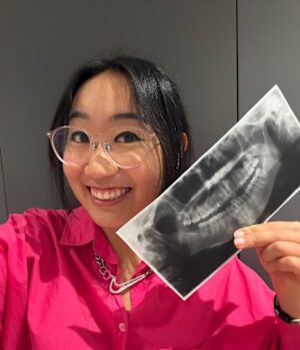
My jaw was locked on one side, and I was starting to lose a bit of hearing in my right ear … all thanks to a wisdom tooth which had decided – rather selfishly – to erupt at an awkward angle.
I discovered I had this wisdom tooth when it caused a canker sore and prompted me to count, rather awkwardly, the number of teeth in my mouth while sitting on a bus last year.
Realising an extraction would cost several hundred dollars – and that the discomfort went away (at least temporarily), I put it off. Last month, though, I very nearly bit the bullet: the tooth had, once again, caused a sore. And this time, it seemed a bit worse, causing stiffening in my jaw.
My job requires a lot of talking – and I’m quite the yapper in my personal life – so limited jaw mobility was less than ideal.
Dental care is one of those things that most can’t live without. Yet, it’s not covered by Medicare, meaning only some, including children and concession cardholders, can access it free.
Australian Bureau of Statistics data show that in 2024-25, one-quarter of adults who needed to see a dental professional did not see one, or delayed seeing one, at least once in the previous 12 months.
The problem was especially common for more vulnerable demographics including women, those aged 25-34, and people living in areas of socioeconomic disadvantage. And nearly one in five people who delayed seeing a dentist – or skipped seeing one altogether – cited cost as a reason.
The problem with this is that people will often hold off as long as they can until the discomfort has become unbearable, and the problem has worsened to a point where it ends up costing significantly more.
One in three Australian adults have active, untreated cavities – perhaps because they choose to delay treatment which can cost several hundreds of dollars per tooth, depending on the size and location of the decay … or because they have not gone to a dentist recently and are unaware.
It wasn’t until my pain pushed me to seek out a dentist for the first time in years that I learnt I also had bruxism: a condition where people unconsciously clench, grind, or gnash their teeth, often in their sleep (and, as if my mouth wanted to throw in a bargain: that I have another tooth sitting dormant above my two front teeth which will need monitoring).
“They’re both OK for now,” the dentist told me. “But over time, the bruxism will grind your teeth down and cause problems.”
When I got quoted $800 for a custom mouthguard, I decided I wasn’t quite ready to pay through my teeth. That might cost me long term (especially because the cheaper pharmacy alternatives I’ve tried since have ended up in the bin).
The cost of dental treatments, which can rack up to thousands – or tens of thousands – of dollars, has already driven a surge in people trying to get early access to their super. That’s not a situation people should find themselves in.
The Greens have pushed for bulk-billed dental care: a policy that the federal Parliamentary Budget Office has estimated would cost $196 billion over the decade to 2034-35, or an average of nearly $20 billion a year (equal to about one-seventh of the federal government’s healthcare spending and one-third of its education spending in the latest budget).
But neither the government nor the opposition at a federal level has put forward a comparable policy on dental care, leaving a big hole in healthcare coverage.
That’s despite the Grattan Institute suggesting that the cost could come down to about $8 billion a year by capping funding for each patient, excluding cosmetic and orthodontic treatments, and using “efficient workforce models”: where dental assistants and therapists play a bigger role (not all dental problems require a dentist).
Phasing the plan in over a decade would also allow the country to train more dental professionals to keep up with higher demand.
Separately, Victorian Premier Ben Carroll last month proposed making public dental care free for an estimated cost of $230 million over the next three years, building 10 new clinics which could function similarly to urgent care clinics. People would be able to drop in for treatment of minor decay, removal of plaque, or preventive care, and would also have access to fillings, root canals and extractions.
While subsidising dental care can seem expensive, there are potentially bigger costs to leaving it unchanged.
Like most health issues, early detection and preventive care are crucial to ensuring the best possible outcomes. And leaving a serious issue untreated can lead to people ending up in hospital with life-threatening emergencies such as breathing difficulties (which are also costly for taxpayers). Every year, there are about 80,000 hospital visits in Australia which could have been avoided if people were getting regular check-ups.
There’s also a big hit to the country’s productivity if people are struggling with pain and discomfort, or ending up with serious or permanent damage from putting off treatment.
To get people access to dental care as soon as possible, and to have the best shot at doing this without workforce shortages, the government needs to start prioritising more affordable dental care now.
I’m ignoring my wisdom tooth problem for now, but like the long-term consequences of letting costs stand in the way of Australians getting dental treatment, it’ll only continue to grow.
Millie Muroi is the Herald’s economics writer.
Get a weekly wrap of views that will challenge, champion and inform your own. Sign up for our Opinion newsletter.
 Millie Muroi is the economics writer at The Sydney Morning Herald and The Age covering workplace and economics. She was formerly an economics correspondent based in Canberra’s Press Gallery and the banking writer based in Sydney.Connect via X or email.

