Source : INDIA TODAY NEWS
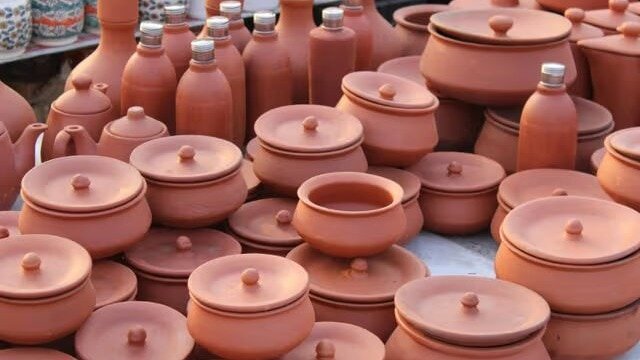
In the villages around Gorakhpur, generations of artisans have shaped clay collected from local ponds into toys, utensils and decorative objects. Today, their elephants, horses, diyas and idols are travelling far beyond Uttar Pradesh, reaching major Indian cities, online shoppers and overseas markets.
The expansion of Gorakhpur’s traditional terracotta industry has been aided by the Uttar Pradesh government’s One District, One Product (ODOP) programme, which has provided artisans with training, equipment, financial assistance and access to wider markets.
advertisement
The craft’s inclusion under ODOP, along with its Geographical Indication tag, has given it a distinct identity and helped turn a largely household-based occupation into a growing commercial enterprise.
Villages such as Khutahan Khas, Langdi Gulriya, Padri Bazar and Aurangabad have emerged as important terracotta clusters. Hundreds of families, including many women, now depend on the craft for their livelihoods.
FROM A MUD HOUSE TO A RS 1.5-CRORE BUSINESS
President’s Award recipient Rajjan Prajapati has witnessed this transformation first-hand.
Prajapati, who began life in a mud house, now runs a terracotta manufacturing unit in the Gulriya area. His workshop employs around 25 people and produces goods on a scale that would once have been difficult for a traditional artisan household to imagine.
Trucks regularly leave his unit carrying finished terracotta products to markets outside Gorakhpur. According to Prajapati, each consignment is worth around Rs 4-5 lakh. With nearly two dozen truckloads dispatched every year, he estimates his annual business at around Rs 1.5 crore.
The growth of his business has also transformed his family’s circumstances. They now live in a large permanent house, while production is carried out across several levels of the workshop.
Prajapati wants to expand further, arguing that higher production and better margins would generate more employment and raise the incomes of those working with him.
His journey reflects the broader change taking place in Gorakhpur’s terracotta belt, where some artisans are moving beyond small batches for local buyers and building businesses capable of fulfilling bulk orders.
HOW A TOOLKIT EASED PRODUCTION
For Pannelal Prajapati of Aurangabad village, terracotta is a family occupation that has gradually developed into an established business.
His unit employs five to seven workers, who mould, decorate and fire the products before storing them for dispatch.
Pannelal said production was previously difficult because artisans lacked proper equipment. A free toolkit provided under the government programme helped ease some of those constraints and improve the manufacturing process.
He now dispatches around one truckload of terracotta goods every month and estimates his annual business at Rs 60-70 lakh.
His personal circumstances have changed alongside his enterprise. Pannelal, who once lived in a tin-roofed house, now owns a permanent home. After repaying a smaller loan taken earlier, he hopes to secure greater financial assistance to expand production.
For artisans such as Pannelal, the toolkit is more than a welfare benefit. It provides the basic infrastructure needed to turn a traditional, labour-intensive craft into a commercially viable business.
SMALL ARTISANS FIND STEADY INCOME
While a few producers have built businesses worth lakhs or crores, terracotta remains a modest but dependable source of income for many artisans.
Heeralal Prajapati has worked in the sector for around 18 years. He said the government had constructed workspaces in the village and allotted separate rooms to artisans, allowing them to operate in a more organised setting instead of working entirely from their homes.
Heeralal earns around Rs 15,000-16,000 a month from the craft. He said Aurangabad has around 12 terracotta shops employing nearly 60-70 people.
The village’s products are also reaching markets outside the state. Artisans are currently fulfilling orders from Mumbai, while consignments have also been sent to Varanasi.
Payments are increasingly transferred directly to their bank accounts, Heeralal said, giving artisans greater control over their earnings and businesses.
Access to distant buyers is critical for a sector that was once heavily dependent on local traders, seasonal fairs and demand from nearby markets.
HOW ODOP BUILT AN ECOSYSTEM
Industry Commissioner Ujjwal Singh said terracotta was selected as Gorakhpur’s ODOP product because of its traditional and cultural importance.
The programme seeks to preserve the craft while helping artisans increase production, improve their skills and find new buyers.
Artisans receive training and free toolkits under the initiative, while those who complete the training can also become eligible for subsidies through the department.
The assistance is intended to create an ecosystem around the craft, from improving production to connecting artisans with markets. The latter is especially important because greater manufacturing capacity brings limited benefits without a steady network of buyers.
Online marketplaces have added another route to customers. Gorakhpur’s terracotta products are now sold on digital platforms, allowing artisans to reach consumers who may never visit the district or encounter the craft at a traditional exhibition.
LOCAL CLAY, WIDER MARKETS
The raw material and the artisans’ methods remain rooted in tradition. Clay is still sourced locally and shaped by hand into familiar figures, utensils and decorative pieces.
What has changed is the journey of the finished product.
Items that once reached consumers largely through local traders are now showcased at exhibitions, listed online and transported in truckloads to cities across India and markets abroad.
The GI tag has further strengthened Gorakhpur terracotta’s identity, distinguishing it from other clay handicrafts and linking the products to their place of origin.
The next challenge is to ensure that the industry’s expansion benefits smaller artisans as much as its largest producers.
For entrepreneurs such as Rajjan Prajapati, the opportunity lies in scaling up production and creating more jobs. For smaller producers such as Pannelal and Heeralal, the priorities are better equipment, affordable credit and dependable buyers.
For the younger generation, the sector’s growth could determine whether terracotta survives merely as an inherited occupation or develops into a viable modern livelihood.
In Gorakhpur’s villages, that transition is already visible. Clay dug from local ponds is passing through larger workshops, exhibitions, trucks and online marketplaces before reaching customers across India and beyond. The craft is centuries old, but the business around it is being reshaped.
– Ends
SOURCE :- TIMES OF INDIA