

Source : INDIA TODAY NEWS
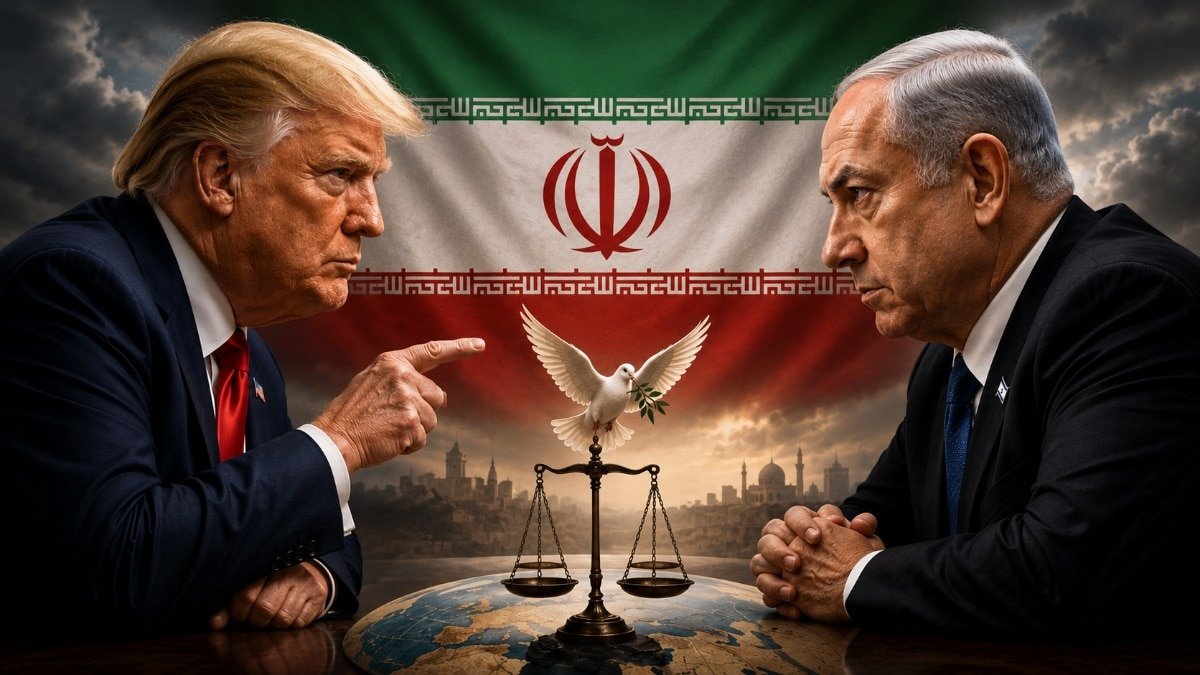
US President Trump is reportedly close to advancing a potential agreement with Iran, with reported implications that extend to Israel and Lebanon. While details remain politically sensitive, the proposal has already produced clear disagreement within Israel’s governing coalition.
Israel’s National Security Minister Itamar Ben-Gvir has rejected the agreement, stating that Israel should not accept arrangements that he believes could limit its security freedom of action or operational independence.
advertisement
This position has placed Prime Minister Benjamin Netanyahu in a balancing position between external diplomatic engagement and internal coalition management.
Israel’s current government holds 64 seats in the 120-seat Knesset, above the 61-seat threshold required for a parliamentary majority. This margin is narrow in coalition terms and depends on maintaining unity among multiple parties.
Ben-Gvir’s Otzma Yehudit party holds six seats. In Israel’s parliamentary system, the withdrawal of a single coalition partner of this size would reduce the government below the majority threshold and potentially trigger its collapse or force a reshuffle.
Ben-Gvir has previously used this leverage. In 2025, he resigned from the government over disagreements related to a Gaza ceasefire arrangement before later rejoining the coalition.
Netanyahu’s coalition also includes other right-wing parties, meaning internal agreement is required for major foreign policy decisions, particularly those involving security and territorial arrangements.
Under Israel’s parliamentary system, governments are formed through coalitions rather than single-party majorities. As a result, smaller parties can exert significant influence when the governing majority is slim.
Recent polling trends in Israel have suggested volatility in voter support for the current coalition bloc, with several surveys indicating potential difficulty in maintaining a majority if early elections were held. However, polling outcomes vary and remain subject to change based on political and security developments.
Supporters of the government argue that coalition stability is a necessary condition for managing ongoing regional security challenges and ensuring continuity in decision-making.
Critics argue that coalition dynamics can influence policy outcomes, particularly when smaller parties hold leverage over government survival.
In this context, Ben-Gvir’s opposition to the Iran agreement reflects not only a policy disagreement but also the structural constraints of coalition governance in Israel.
Netanyahu’s options are constrained by parliamentary arithmetic. Forming an alternative majority would require assembling a new coalition from existing Knesset factions, while dissolving the government would lead to elections.
The situation illustrates how Israeli foreign policy decisions are often closely linked to domestic parliamentary stability, particularly in governments with narrow majorities.
As a result, the response to the Iran agreement is shaped not only by international diplomacy but also by internal coalition requirements and the need to maintain a functioning parliamentary majority.
The key constraint facing Netanyahu is therefore institutional rather than personal: sustaining a coalition that depends on a small number of seats distributed across ideologically diverse parties.
– Ends
SOURCE :- TIMES OF INDIA