

Source : the age
Australians should expect to witness mass wildlife deaths after bird flu was found to have become established on the mainland, as the federal government confirmed dozens of greater crested terns had tested positive for the deadly H5N1 variant that has killed more than 300 million animals around the world.
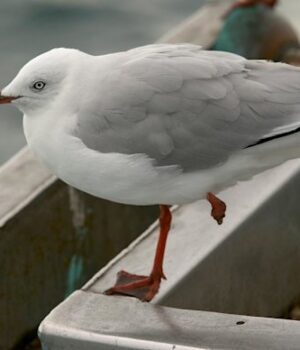
A seagull and the crested terns were found in Robe and at Baudin Rocks respectively, off the southern South Australia coast.
As the poultry industry braces for stock infections, rangers across the country survey water mammals such as seals and endangered sea lions – known to be susceptible – for the signs, while in the nation’s cities seagulls, possums and other scavenging animals could spread of the virus, exemplifying the breadth of threat the virus poses.
“Sadly, we do know that once the H5 bird flu is spreading in wildlife, and the natural environment, it is not possible to avoid significant losses – which is what we are starting to see now,” Agriculture Minister Julie Collins said at a press conference on Monday.
“Australians should expect to see more spread and larger numbers now of wildlife being affected.”
Environment Minister Murray Watt said the mass deaths in South Australia were “just the beginning” in what is likely to be a “long and difficult journey”.
While the risk to human health remains low, an outbreak of a different strain in 2024 led to about 2 million chickens being killed, causing egg shortages.
Collins said Australia had improved biosecurity preparations to protect the industry, having learned from the impact of the disease around the world.
Kate Millar, chief executive of Australia’s largest bird conservation group, Bird Life Australia, likened the mass deaths over the weekend to the moment bird flu first hit South America in 2022. Within months the disease had spread 6000 kilometres along the continent’s coasts, killing millions of birds, as well as seals, otters, dolphins and porpoises.
Invasive Species Council chief executive Jack Gough warned the impending disaster would be confronting for the public, likening the onset of bird flu to the animal deaths from the South Australian algal bloom and the Black Summer bushfires.
“It’s not going to be theoretical. People are going to confront this. There has been complacency around environmental issues, particularly in our federal politics over the last few years, outside of the climate wars,” Gough said.
“But as people start to deal with the grief and reality of mass wildlife deaths, the politicians that get out ahead of it with a good story to tell about funding resilience are going to weather that public shift in sentiment a lot better.”
Birdlife Australia head of science Michael MacDonald worked with the Royal Society for the Protection of Birds in the UK when bird flu hit there, and recalled a sense of loss and helplessness when witnessing colonies of seabirds collapse in Wales.
“Some things happening to nature are our fault, this is not. All we can do is try to protect the animals from other pressures,” he said.
An estimated 13,000 seal pups were killed by the virus on Australia’s sub-Antarctic Heard Island territory, more than three-quarters of new births on the island, before it was carried to the mainland, likely by a large pelagic bird such as a petrel.
The disease is now likely to be spread by scavenging birds and mammals, such as common silver gulls – what many would recognise as seagulls – as well as cats and foxes.
People have been warned not to approach or touch birds that show signs of bird flu. Symptoms include being unable to stand, walk or fly properly, breathing difficulties, and mass deaths in one area.
Bird Life Australia said the onset of the virus strengthened the advice against feeding wild birds such as seagulls and magpies, and chief vet Beth Cookson also said authorities would call on Australians not to “encourage situations where there might be greater aggregations of wild birds. That’s certainly one context where the disease could spread further”.
Professor John Woinarski, one of Australia’s leading Australian biologists, said heavy monsoons that have seen an inland sea formed in parts of central Australia could also see the disease spread rapidly inland.
“There’s bound to be silver gulls and pelicans and ibis and waterfowl flying into inland Australia and the Murray River system and spreading the infection very rapidly and very extensively, and with dire consequences,” he said.
He also warned the disease was likely to hit mammals in Australia, such as Tasmanian devils, quolls and perhaps even platypuses. He said the disease had not yet caused known extinctions around the world, but had driven many animals close to the brink.
In cities, species such as possums, which are known to scavenge on dead animals, were likely to be hit alongside all birds.
The Albanese government has committed $113 million to prepare a rapid response, which may involve quarantining farms and restricting transport between locations, as well as ramping up efforts to reduce the numbers of feral cats, foxes and pigs.
Gough said this was critical not just because these animals preyed upon birds and eggs, but because they can carry the disease and damage critical habitats.
“We’re about to have … big breeding events [in Spring], and we want the next two seasons of breeding events to be as good as we can possibly make them, because we’re going to have these waves of bird flu hitting,” Gough said.
CORRECTION
An earlier version of this story incorrectly stated that bird flu could soon affect Tasmanian tigers, quolls and platypuses. It should have said Tasmanian devils.
 Nick O’Malley is National Environment and Climate Editor for The Sydney Morning Herald and The Age. He is also a senior writer and a former US correspondent.Connect via email.
 Brittany Busch is a federal politics reporter for The Age and Sydney Morning Herald.Connect via email.