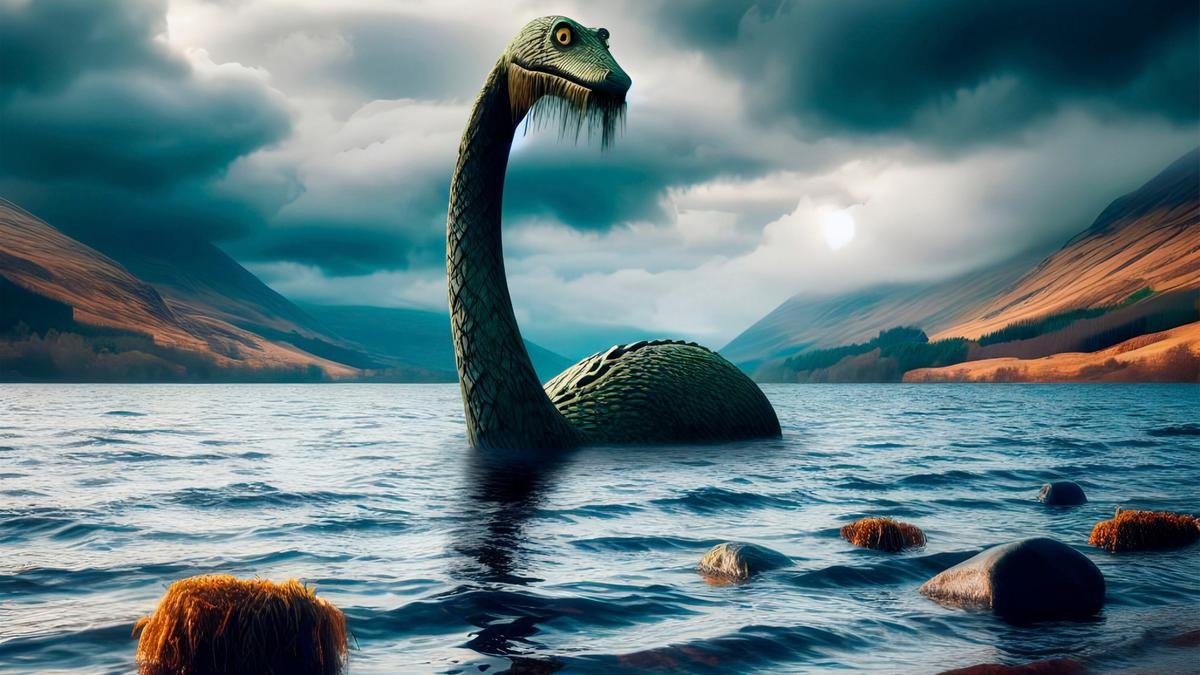
Source : Perth Now news
A Loch Ness Monster expert has revealed the most common mistakes made in Nessie sightings.
Adrian Shine – who founded the Loch Ness Project and led the Operation Deepscan Nessie hunt in 1987 – has revealed most people who think they see a huge creature in the Scottish loch have actually seen something much more ordinary explaining “wind slicks”, tree logs and boat wakes are usually to blame for strange movements in the water.
Adrian told the Press And Journal newspaper: “The boat wakes … the pathways, the tracks left, which are not the wake of a boat, but propeller turbulence.
“It’s the propulsive mechanism, which can cause what I call the path or tracks behind vessels, which look dark and people have mistaken for living creatures.
“They are formed by wind slicks, all sorts of physical effects on the surface of water, and also by logs and tree stumps, which are washed into the loch, and can move in counterintuitive directions, even directly against the wind.”
Adrian went on to insist animals including otters, seals and birds can also be mistaken for Nessie, adding: “The heads and necks … The seals, which could have had an effect, swimming deer, otters, and the different sorts of sighting they cause. And water birds and how they can look bigger.”
It comes after it was revealed secret services operatives in the UK investigated the Loch Ness Monster and concluded it was real.
Adrian published reports from British officials in his new book A Naturalist’s View of the Loch Ness Enigma, revealing agents looked into sightings of the fabled beast back in the 1960s – analysing captured by the local Loch Ness Investigation Bureau (LNIB) – and they decided there was likely to be an unidentified “animate” creature living beneath the surface.
A video shot by former RAF pilot Tim Dinsdale in 1960 which appeared to show a “hump” moving across the water of the Scottish loch was analysed by workers at the Joint Air Reconnaissance Intelligence Centre (Jaric).
A report into the film concluded: “The assumption is that it is not a surface vessel. One can presumably rule out the idea that it is any sort of submarine vessel for various reasons, which leaves the conclusion that it is probably is an animate object.”
The book also included correspondence between LNIB founding member and former MP David James and defence minister Lord Shackleton, who asked for the findings not to be made public.
In a letter to James sent in January 1967, Shackleton wrote: “I am returning the film material you sent on 14th December together with the interpretation carried out by Jaric.
“I think you will find this extremely interesting. The report comes to the conclusion that ‘it probably is an animate object’ …
“Our preference would be that you made no public reference to the fact that we have come to this conclusion because we would not wish to find the Ministry of Defence taking sides in a public argument about the possible nature of the underwater population of Loch Ness.”