

Source : Perth Now news
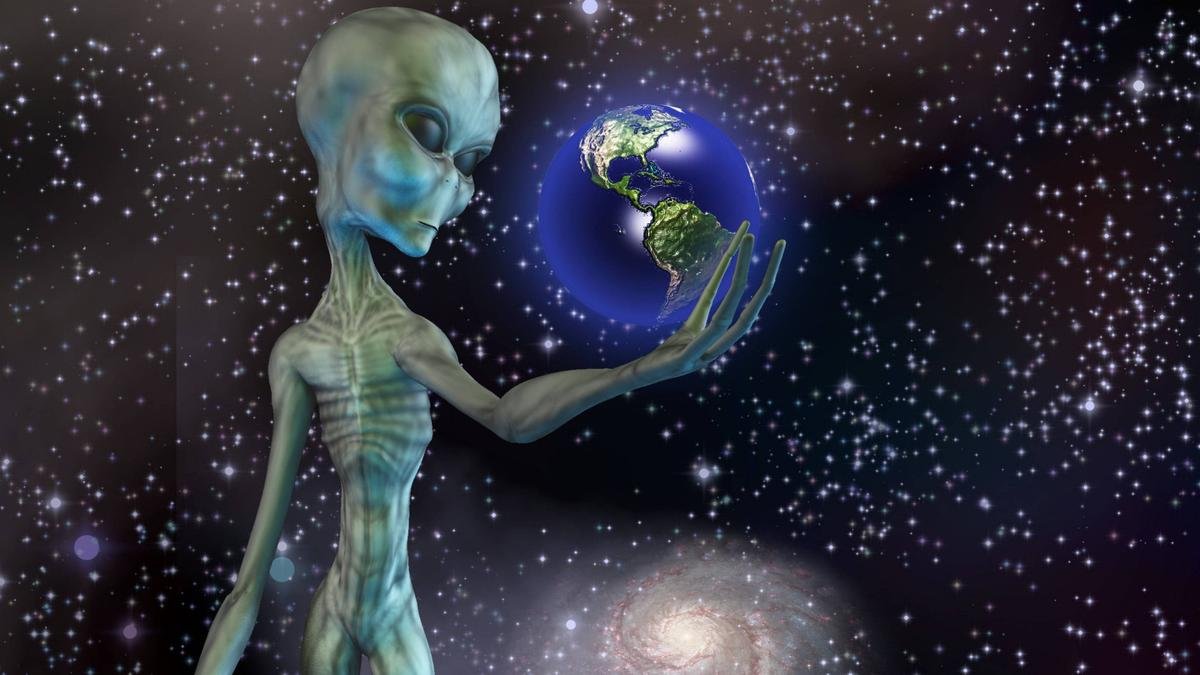
Aliens could have forms humans can’t even imagine, according to a shocking new theory.
Eric Schwitzgebel of the University of California and Jeremy Pober from the University of Lisbon explain their theory in a working paper, in which they focus on an idea called “substrate flexibility”.
In short, substrate flexibility means that although humans have consciousness, it doesn’t mean that consciousness that extends beyond Earth will consist of the same carbon-based life as humans.
They theorise that instead of the flesh and blood the humans are made of, space beings could be made from completely different physical materials.
The theory is in direct contrast to that shown in movies and books, of “humanoid” aliens.
They write in the paper: “Given that it’s likely that functionally complex, behaviourally sophisticated entities have arisen or will arise many times in the observable universe, in diverse substrates, we argue that it would be a violation of a principle of Copernican mediocrity to hold that among these diverse entities, only we, or only we and a small proportion of others who share our substrate, are conscious.”
The alien theory comes amid another study, which says that the “super Earth” exoplanet GJ 3378b, discovered in 2024, could be better suited to supporting alien life than researchers first thought.
As the planet emits 90% less radiation than the sun, it’s in the middle of the “habitable zone” in space, and means that liquid water could even exist on its surface.
While it was initially thought that the exoplanet was five times the size of Earth, new research has shown it’s actually only 2.3 times the size – meaning the atmospheric pressure they initially predicted would “crush” any life form isn’t so much of a factor.
Astronomer and study author Paul Robertson called the discovery that the planet is also closer than they first thought “exciting”, adding: “25 light-years sounds like a long way, but the Milky Way is about 100,000 light-years across, so in that respect it’s our next-door neighbour.”
Meanwhile, Gogod James, who co-wrote the study published last month in The Astrophysical Journal, added that the discovery means there is reason for further research, explaining: “If a planet in the habitable zone has a proper atmosphere, we can justify further research looking for bio-signatures, liquid water or other signs of life.”