

SOURCE :- THE AGE NEWS
Vanuatu has filed a case against France at the International Court of Justice (ICJ) seeking international recognition of its sovereignty over two small islands, amid an escalating sovereignty and maritime boundary dispute between the countries.
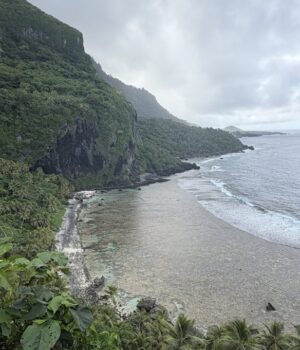
The islands are known on maps and charts by their European names, Matthew and Hunter Islands, but in Vanuatu, they are called “Umaenupne” and “Umaeneg”, with claims of long-standing cultural and religious ties to the islands.
With the ICJ confirming receipt of Vanuatu’s application in a press release, attention turns to the French response. The court can only determine the dispute with France’s consent, so France now needs to decide whether to submit the questions of sovereignty over the islands to judicial determination.
Negotiations between the two countries in Paris collapsed in July following decades of unsuccessful attempts since Vanuatu’s independence in 1980.
President Emmanuel Macron offered to resolve the dispute during his 2023 visit to Vanuatu, and meetings also took place in Port Vila last November.
At the most recent Davos meeting in January, Macron affirmed France’s commitment to international law and even warned against a world in which “the law of the strongest” prevails.
But some French analysts are concerned about the legal precedent of conceding the islands to Vanuatu, worried it will re-energise similar territorial disputes France has with other nations over remote islands, such as Clipperton Atoll, which Mexico wants back.
French right-wing figures have also applied pressure to the issue, with National Rally leader Marine Le Pen warning after the meeting in Port Vila last November that the two islands were “not [Macron’s] to give away”.
As the world’s highest judicial body, the ICJ could provide a final legal determination on the dispute. Vanuatu is banking on France supporting its application for a ruling.
Vanuatu’s Prime Minister Jotham Napat told this masthead: “Umaenupne (Matthew) and Umaeneg (Hunter) Islands have always belonged, and will always belong, to the people of Vanuatu.
“Vanuatu is a strong supporter of the international rules-based order and of the peaceful resolution of disputes through international law. Seeking recognition of Vanuatu’s sovereignty over these islands is not an act of confrontation; it is an exercise of our rights through the legal processes of that international order.
“It is about addressing an unresolved colonial legacy with dignity, determination and confidence in international law.”
Stephen Webb, an Australian lawyer acting for the Vanuatu government – who also acted for Timor-Leste in its maritime boundary dispute with Australia – described Vanuatu’s case as “fundamentally a legal dispute over sovereignty”.
“For Vanuatu, bringing this matter before the ICJ is about finding a definitive, peaceful and legally binding resolution,” he said.
In recent years, Vanuatu won global support for its leadership of the initiative to obtain an advisory opinion from the ICJ that states have a legal obligation to protect the global climate system. This initiative was unanimously endorsed by the UN General Assembly, including France, which co-sponsored the resolution.
China, however, outright rejected the ICJ’s decision in favour of the Philippines in its 2016 case against Beijing’s claims over the South China Sea. Given France’s vocal championing of international law, it may be more difficult for Paris to adopt the same position.
If France rejects Vanuatu’s case, it risks putting itself at odds with a Pacific region committed to decolonisation as well as further unrest in New Caledonia.
Indigenous Kanak chiefs in New Caledonia, including the leader of the pro-independence FLNKS movement, Christian Tein, have all backed Vanuatu’s claims, stating that Kanaks never had links to the two islands and that they belong to Vanuatu.
Kanak chiefs have told Vanuatu’s leaders that when New Caledonia becomes independent, it will return the two islands to Vanuatu.
Get a note directly from our foreign correspondents on what’s making headlines around the world. Sign up for our weekly What in the World newsletter.
 Ben Bohane is Vanuatu-based journalist and policy analyst who has reported the Pacific for nearly 30 years.

