Source : INDIA TODAY NEWS
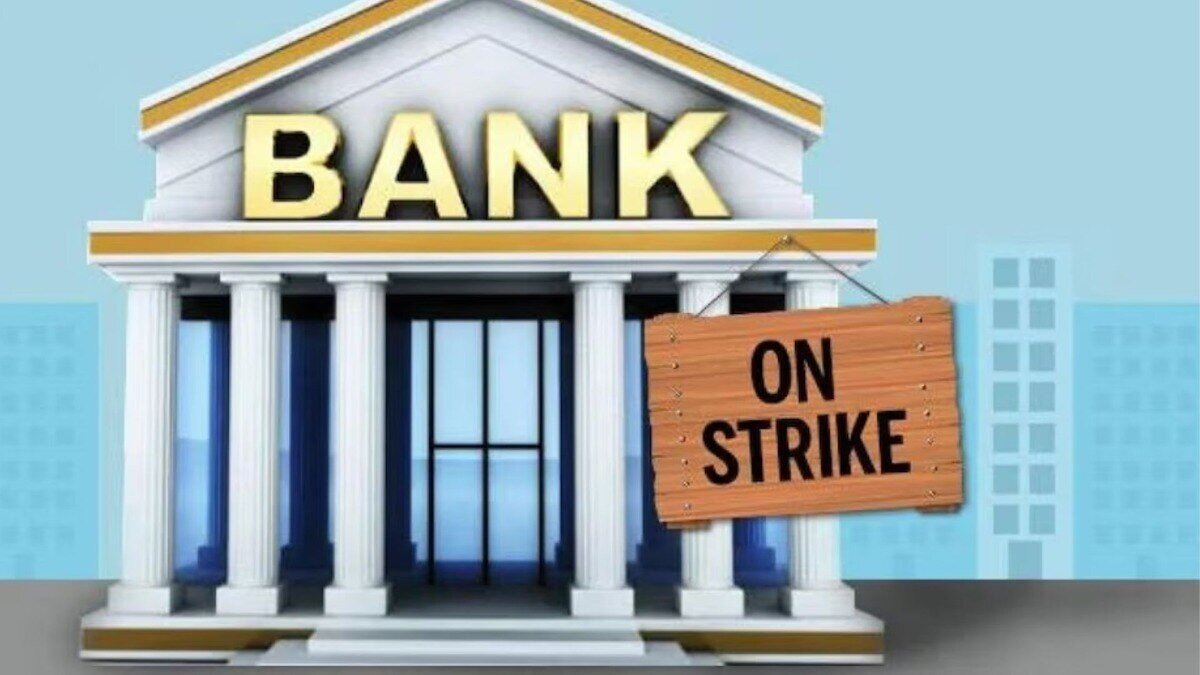
Banking services could face disruption in September as the United Forum of Bank Unions (UFBU) has announced multiple rounds of industrial action over unresolved demands including five-day banking and the government’s new Performance Linked Incentive (PLI) scheme.
In a circular dated August 23, the UFBU, an umbrella body representing bank unions, announced an agitation programme that includes an all-India strike on September 11, followed by a three-day all-India strike on September 28, 29 and 30.
advertisement
The unions have also threatened an indefinite strike from October 26 if their demands remain unresolved.
The September strikes are part of a wider programme of demonstrations, campaigns and other forms of protest announced by the unions.
FOUR DAYS OF STRIKE IN SEPTEMBER
The first nationwide strike has been scheduled for September 11, followed by another three-day strike from September 28 to September 30.
This means the UFBU has announced four strike days in September.
The circular says the decision was taken at an UFBU meeting after the unions concluded that the government had not adequately addressed their demands.
“Honour commitment – implement 5 Days Banking,” the circular says, listing the first of its four demands.
The unions have also called for the government to withdraw its PLI scheme, modify it through discussions with the unions and resolve other pending issues.
Before the September strikes, the unions have planned demonstrations, badge and black-badge campaigns, a press meet and other mobilisation activities.
The programme begins on August 24-25 with efforts to explain the agitation to members. From August 24 to September 10, members have also been asked to work strictly according to rules and procedures, adhere to regular working hours and withdraw from official WhatsApp groups.
WHY ARE BANK UNIONS ANGRY?
There are two major issues at the heart of the current agitation: five-day banking and the government’s PLI scheme for bank employees and officers.
The unions say the issue of five-day banking has already been agreed upon between the Indian Banks‘ Association (IBA) and the unions.
According to the circular, the IBA agreed in the 12th Bipartite Settlement/9th Joint Note, signed on March 8, 2024, to introduce five-day banking by increasing daily working hours by 40 minutes from Monday to Friday.
The UFBU says the proposal was subsequently recommended to the government but has remained pending for more than two years.
The unions have therefore made implementation of five-day banking their first demand.
WHAT IS THE PLI DISPUTE?
The second major issue concerns the Performance Linked Incentive scheme.
The UFBU says there was an understanding between the unions and the IBA that the PLI scheme would be linked to the performance of the bank as a whole, with a uniform number of incentive days for employees and officers up to Scale VII.
However, according to the circular, the Department of Financial Services (DFS) under the Finance Ministry directed banks to implement a different PLI structure for Scale IV officers and above.
The union says the government-backed scheme would allow officers in Scale IV and above to receive PLI of up to 365 days of basic pay, based on individual performance.
For workmen employees and officers up to Scale III, the maximum would be 15 days of Basic Pay plus DA, according to the UFBU’s circular.
The union has described this as discriminatory.
“Under this Scheme, the officers from Scale IV and above would be paid PLI upto 365 days of Basic Pay based on their individual performance while workmen employees and officers upto Scale III would be paid a maximum of 15 days Basic Pay+DA,” the circular says.
WHY THE UNIONS SAY THE PLI SCHEME IS UNFAIR
The UFBU estimates that India’s banks have around 8 lakh employees and officers, of whom around 40,000 are officers in Scale IV and above.
That means the senior officer group accounts for roughly 5% of the workforce, according to the union’s calculation.
The circular argues that the proposed structure would create a very large difference in potential payouts.
“When everyone will get a maximum PLI of 15 days, they will get more than 20 times of it,” the union says, referring to the potential PLI for Scale IV and above officers.
The UFBU also says the government’s approach differs fundamentally from the existing structure, under which the incentive is based on the performance of the bank rather than the individual performance of an employee.
The union says the existing PLI framework provides uniformity across cadres, from sub-staff and clerical employees to officers up to Scale VII.
The government scheme, in contrast, envisages PLI based on individual performance, productivity and efficiency, according to the circular.
The UFBU is demanding that the government withdraw its unilateral PLI scheme and keep its implementation in abeyance.
It has also called for the scheme to be modified through bilateral discussions with the unions.
The dispute has already moved into formal proceedings.
According to the circular, the PLI issue is currently part of conciliation proceedings before the Chief Labour Commissioner (CLC) and is also under litigation before the Delhi High Court.
The UFBU says it has discussed the matter with the IBA and submitted suggestions to the government for improving and modifying the scheme.
However, it alleges that the DFS continues to insist on implementing the government scheme.
The circular makes another significant allegation: that banks have already begun crediting PLI under the government’s scheme.
The UFBU says that during a bilateral meeting with the IBA on August 20, it reiterated its offer to discuss changes to the scheme.
“But we learn with regret that the Government has advised the Banks to implement their Scheme and the crediting of PLI under the DFS scheme has now actually commenced in the Banks,” the circular says.
The union argues that this happened while the matter was before the CLC for conciliation.
This is the union’s account of the development; the circular does not include a response from the government or the IBA.
OTHER DEMANDS: PENSION, DA AND NPS
The agitation is not limited to five-day banking and PLI.
The UFBU also says several residual demands remain unresolved.
These include:
Updating and improving pensionsA uniform DA formula for all pensionersAn option for employees under NPS to switch to the Old Pension Scheme (OPS)Other residual issues
The unions have also expressed concern that the government wants to begin discussions on a fresh charter of demands for the next wage revision while these older issues remain pending.
The September strikes are only one part of the programme.
The UFBU has laid out a series of actions through October.
After the September 28-30 strike, the unions have planned further demonstrations and mobilisation in October. The programme culminates in an indefinite strike from October 26.
The circular lists the four core demands as:
Honour commitment – implement 5 Days Banking
Withdraw the Govt.’s unilateral and discriminatory PLI scheme – keep implementation in abeyance
Modify the scheme through bilateral discussions with Unions
Resolve residual issues
The immediate question, therefore, is whether discussions between the government, the IBA and the unions can resolve the issues before the September strikes.
For bank customers, the key takeaway is that four days of nationwide strike action have been announced for September, but the actual extent of disruption to banking services would depend on participation and any developments in negotiations before those dates.
– Ends
SOURCE :- TIMES OF INDIA